
Hunting and Fishing News Blog Articles

Stay up-to-date on hunting, fishing and camping products, trends and news.

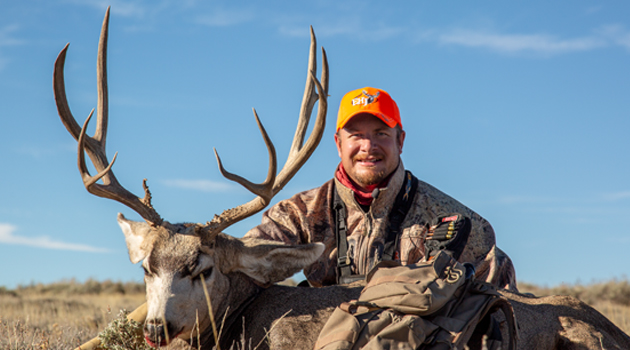
Hunting Late Season for Trophy Antelope

Hunting antelope bucks with a rifle in mid to late October is my personal preference. Many western states have hunting seasons that last well into that time frame. In fact, Montana’s antelope season sometimes runs well into November. A big advantage to hunting this late is that by the time October rolls around, most hunters have filled out or given up completely. After spotting a big buck in the final days of the season, the concern of other hunters competing with you almost becomes a non-issue. On most days, I can have the entire unit to myself! 

By mid-October, with the rut finally behind them the antelope will begin to group up for the coming winter. This scenario can be both good and bad. It’s good because sometimes a huge buck will show up for their winter gig. It’s bad because if you don’t know exactly where the antelope winter, you can find yourself looking at a lot of empty country. 

The key to finding bucks is to learn the antelope migration movements within your unit. This knowledge comes only from hunting during that post-rut period for several seasons or talking to the area biologist about where the antelope congregate when a late fall storm blows in. 

Now let me give you an excellent example of knowing your hunting area and the movements of antelope. In 2007, I drew a good Wyoming antelope permit. It was my third in a row – a record for me. If you look at the drawing odds for residents in that unit, it’s only about a thirty percent success rate. Those of you who watch our TV show know that I have hunted this particular area many times. I know it very well and the season typically runs from the second week in September until the third week in October. 


Continue reading

Copyright

© Eastmans

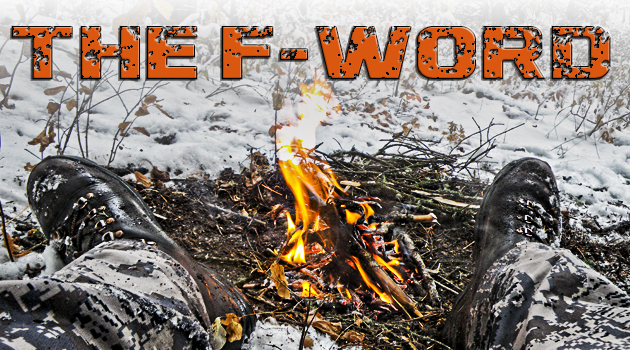
The F-Word

Guest Author: Tim Hoffer

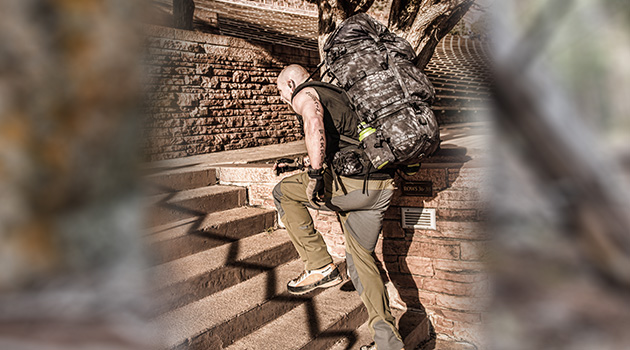
Adjusting the straps of my overloaded backpack for the hundredth time, I realized too late that I had too much gear, too many layers on and not enough sense to follow the lead of my two climbing partners, now 50 yards ahead of me breaking trail through shin-deep snow like a pair of mountain goats. I slogged on behind, feeling more like an anchor than a solid third teammate. I was not prepared, far from it. 

Comparing two passions of mine – alpine climbing and backcountry hunting, the similarities between the two when it comes to failures and setbacks are many. 

Flashing back to the full-day ice climb, I can now analyze where I went off course. 


Continue reading

Copyright

© Eastmans

The Art of the Day Hunt

It’s getting into late season for us bow guys and if you are anything like me, you have probably burned most of your vacation and sick days. Now you’re down to maybe a free day here or there. With the limited time of a single day, you may wonder if it is even worth going out. I learned a long time ago you make your own luck and the more time you are afield the better chance you have, even if it’s only a day. A lot can happen in a day, especially if you hunt efficiently. If you make the most of your free day, it is amazing the opportunities you can have. It’s about going light, covering country and making something happen. It is the art of the day hunt. 

I really enjoy having a free day to hunt and go hard whenever I have the chance. In fact, I find that in day hunting, you are uber-effective. I find you can go super light with just a day pack allowing you to cover tons of miles without the weight. I also find you get right to the point, heading to your highest percentage spot putting yourself into critters. When I do get into animals, I never hunt recklessly but I do hunt really aggressively. I know I only have the day and push to try to get into range. If there is a chance I can kill that animal, you can bet I will roll the dice. 

The Plan

Okay, so you are freed up for a day and looking to hit the woods but where will you go? That is always the million dollar question and is a tough one to pin down. I will go back and forth on spots until I finally commit to where I will be headed. I will choose my location based on past days hunted or even past years hunted with similar conditions. I will give a call to my buddies I hunt with and see where they have been hunting and what they have been seeing. You have to be careful with this one because it does no good to chase one of your buddies’ vapor trails in country where he has blown out all the game. I always ask, “Would you go back in there if you had a day?” 


Continue reading

Copyright

© Eastmans

What makes a 180" mule deer?

Back in the 60s and 70s, I spent the early winter months with my left eye plugged into a spotting scope watching mule deer bucks. It was in those years that I came up with a system to judge the rack size of a buck in the field. It came about after many hours of judging them on the hoof, and then in the spring picking up their drops and gross measuring them. While guiding during the same time period, I measured many harvested bucks. These two practices gave me the opportunity to develop a rack bracketing scoring system. The motivation came while I was guiding clients who required me to know the B&C gross class of the buck before they squeezed the hammer.

Let me go through my system for field judging a buck. You can start by using the ears and a few other simple rules to help determine if the buck is a 160, 170 or 180-class gross buck. This is my “Rack Bracketing System” for field judging a gross rack score. The system isn’t designed to give a net score, but with some practice you will be able to narrow the gross score down to high, mid, or low 170, 180, or a super 190- buck.

First determine the distance between a buck’s ears, ear-tip to ear-tip across the forehead. This measurement will be used to evaluate inside spread width. Unfortunately mule deer ears will vary in length from 9 to 10 inches depending on the unit or state. In addition some bucks in certain units will have bigger heads adding to the ear tip to ear tip length. In my experience Wyoming and Idaho mule deer, tip to tip, will vary from 21 to 23 inches. However in Colorado and Utah ear widths will be 24 to 25 inches. I guarantee that there will be exemptions to the rule in all western states, but this is a beginning benchmark. Saying that, you need to gather your own ground knowledge for the units you personally hunt.

My first rule for judging is what I call “good fronts will make up for bad backs.” The “fronts” include the three measurements:

Continue reading

Copyright

© Eastmans

90%’er

Anyone that’s spent much time in the outdoor community has probably heard someone say, “He’s a 10%’er” or that “10% of the hunters kill 90% of the animals.” and with very little research you will find that in fact 10% of the hunters do kill 90% of the game.

So if 10% of the hunters kill 90% of the game, what are the other 90% doing wrong? I can’t say for sure, but my friends and I have a theory on this and have come up with a saying of our own. 

90%’er, NOUN, DEFINITION – Someone who spends 90% of the time buying gear, working out in the gym and hypothesizing on what he’s going to do in the wilderness from the armchair of his living room couch.

Now that you’ve read the definition, you may be wondering, am I one of these 90% guys you’re talking about? If this is the case, I’ll give you a list of things that will help point you in the direction of someone who’s a 90%’er. 


Continue reading

Copyright

© Eastmans

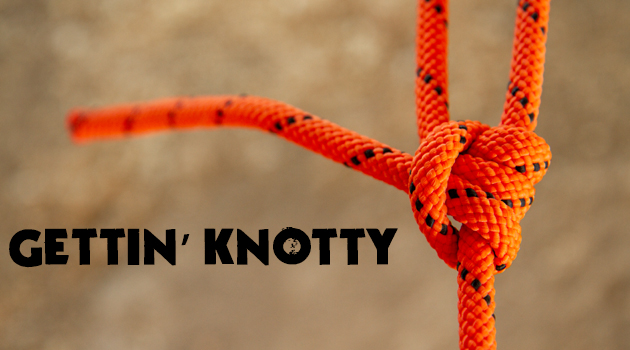
Gettin’ Knotty


Knots, knots, knots. Growing up I learned knots at an early age. Tying knots is a habit I don’t think about now but I have found the majority of hunters out there don’t know how to apply a knot for a given application. However, if you were never educated on knots and their application, where would you learn them? 

Knowing knots and their applications makes your life easier. It makes you more efficient. And, knowing the right knot can even save a life. Here are six basic knots that are a must-know on any hunting or camping excursion. 

Continue reading

Copyright

© Eastmans

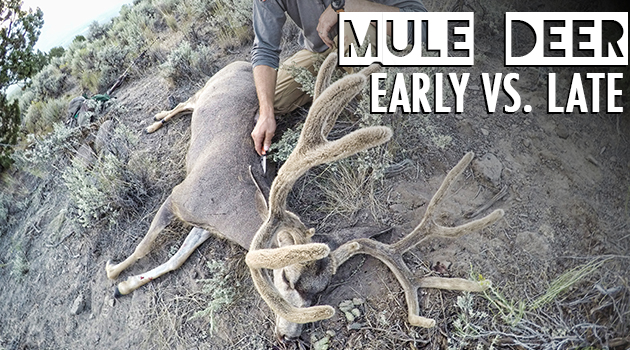
Mule Deer – Early vs. Late

As the swelled-up buck with the cheaters and dropper was ingested by an aspen grove in tow of his hot doe, I thought to myself, “I will come back here next September 10th and kill this buck on opening day of the Wyoming deer season.” 

As you may have guessed, that day would never happen. Well, let’s just say September came and went to no avail. I never could turn the buck up during an open hunting season. Experience of 16 years will get you plenty of naivety and not much reality sometimes. It would be nearly 25 years later that I would only begin to fully understand the concept of mastering the art of the seasonal adjustment when it comes to deer hunting. The buck you hunt during August is not the same deer you are chasing in October, which isn’t the same deer you are in pursuit of in November. Deer change their behavior and sometimes even their location and habitat significantly through the three months of the fall season. Learning to key in on these transitions in your hunting area can increase you odds of success next season on a mature buck. 


Continue reading

Copyright

© Eastmans

Montana Grizzly Attacks Racking Up!


In the fall of 2018 we experienced a tragedy in some of Wyoming’s more remote country when a sow grizzly attacked a guide and his hunter while they were breaking down a recent elk kill. That hunt ended in tragedy and my prayer is that we don’t experience that in any state this year.

With four separate attacks now in the Gravelly Range it appears that Montana would be the most likely place to have a major incident. According to NBC Montana, as of Tuesday, it is unclear if all four attacks have come from the same bear.

I won’t beat a dead horse on the need for a season as that has been done in this blog very well on several occasions. I also won’t go into detail on the negative effects of courtroom decisions inhibiting our ability as western residents to responsibly manage all of the species here in the West. It’s a tough pill to swallow for respective states to be hamstrung in their decisions for what is best for the big picture of the North American Model Of Wildlife Conservation.

What seems to be new about the incidents this year is that the Gravelly hasn’t seen a grizzly bear conflict in a long time. Morgan Jacobson of FWP note that “The Gravelly is an area that they’ve kind of grown into, so [the bears’ geographic distribution is growing and their density within that area is also growing.” To me this sounds like they are outgrowing the range they have called home for a long time.

My question for this then becomes how long will growing populations of grizzlies be considered endangered? How long will we have to rack up attacks and conflict before we are able to manage the largest predator in the Lower 48?

Continue reading

Copyright

© Eastmans

Eastmans’ Family Deer Hunt!

Join a DIY mule deer hunt in Wyoming with Ike and Mike Eastman. This hunt is a family tradition for the Eastmans’. Mike Eastman has been mule deer hunting this part of the state for decades now. The father-son duo returns to the sagebrush for another friendly big buck competition in this web edition of Eastmans’ Hunting TV.

Don’t miss this high country deer hunt: https://youtu.be/J92139sErcs

Catch up on all our Eastmans’ Hunting TV episodes: https://www.youtube.com/playlist?list…

The post Eastmans’ Family Deer Hunt! appeared first on Eastmans' Official Blog | Mule Deer, Antelope, Elk Hunting and Bowhunting Magazine | Eastmans' Hunting Journals.

Copyright

© Eastmans

Outdoor Edge RazorMax Giveaway!

Here is your chance to win a Outdoor Edge RazorMax! These knives combine razor sharp blades with razor sharp performance.Two different blade types are included with your RazorMax: one 3.5 inch drop-point to 5.0 inch boning/fillet blade for one knife to field dress, and process game! One use with this knife and you’ll be hooked! Sign up for this giveaway by filling out the form below. Good luck!  —Product Description From Outdoor Edge

Get 30% OFF and FREE Shipping at OutdoorEdge.com! Use coupon code EASTMANS30A

Loading…

The post Outdoor Edge RazorMax Giveaway! appeared first on Eastmans' Official Blog | Mule Deer, Antelope, Elk Hunting and Bowhunting Magazine | Eastmans' Hunting Journals.

Copyright

© Eastmans

Break Down Any Big Game Animal!

Processing your own wild game animals is fun, easy and very rewarding. Not only do you save the cost of commercial processing but you are to control the quality of how the meat is cut and portioned for your family. By marking each package personally you know exactly what you are taking out of the freezer each and every time. In this 4-part series of videos, expert processor Adam Eller takes you through all the steps to break down any big game animal and prepare the cuts for the freezer. Watch all 4 videos here in this blog and get to know the most efficient ways to break down your big game trophy!

Get 30% OFF and FREE Shipping at OutdoorEdge.com! Use coupon code EASTMANS30A


The post Break Down Any Big Game Animal! appeared first on Eastmans' Official Blog | Mule Deer, Antelope, Elk Hunting and Bowhunting Magazine | Eastmans' Hunting Journals.

Copyright

© Eastmans

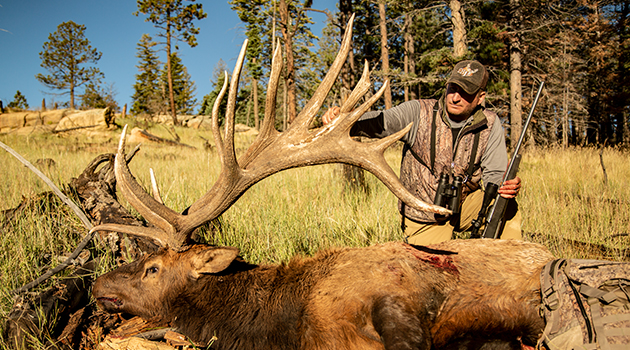
Elk Hunting Colorado – 360+ Inch Bull!

Copyright

© Eastmans
High Expectations at Low Elevations ( Guest Author By : Dalton Buller)

By : Dalton Buller

Lower elevations are often overlooked when planning a hunt, but they hold potential for mature deer. Lower elevations can range anywhere from 4,000 feet to 7,000 feet but it all depends on where you choose to hunt. You can get far enough off the beaten path to hunt big deer effectively. You just have to work a little harder and hunt a little smarter to find a mature buck. However, you don’t have to stay on the mountain to be able to hunt all day. The downside is that you may have to start earlier and walk in the dark for your success rate to go up.

Time is often short for many of us and is one of the biggest factors determining success on a lower elevation hunt, whether it’s how much time you have between sunrise and sunset, how long you have to put together a stalk, or whether you have days or hours to hunt. Time determines where you hunt, how far or if you can pack in and camp on the mountain for a couple of nights. There is no doubt that the high country holds the some of the best potential for killing a mature buck, but what if there is no time to get out for more than a couple of days to hunt for a mature mule deer?


Continue reading

Copyright

© Eastmans
Hunting “Sagey”Bucks

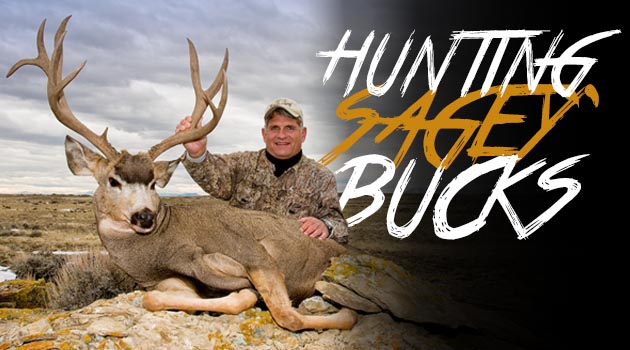
Standing with a dead rest for two hours! I was peering through a Zeiss riflescope on a Savage .270 short mag padded up and waiting on a mule deer buck. Protruding above the sagebrush flat that’s dotted with aspen groves are two 1” antler tips. Bedded is a trophy buck hanging out until the evening dinner bell rings. Waiting on him gave me time to flash back to falls past and smart mule deer bucks that would use this terrain and cover to go undetected for many falls.

One of the smartest mule deer I have ever danced with was an old nine-year-old buck with a 7” cheater as big around as a large cigar. I spotted the buck while glassing on a lookout where I could watch miles of sage and aspen groves. At dusk the buck came out of an aspen grove and started to chow down. Suddenly, just before 0-dark-thirty, over the ridge, gunfire rang through out the valley. The old buck’s head went up and he started moving down the slope to where heavy brush dotted the landscape.

I watched as he would slip down 100 yards and then stand for 10 minutes watching his backtrack. He did this several times before finally laying down in heavy brush. The next morning I was on the lookout glassing the area where he had disappeared into but couldn’t pick him out. He must have moved during the night out of the area! Not giving up, I glassed in a five-mile radius. Bing-go!

On the afternoon of the last day of the season I was glassing four miles from where he had disappeared. There he was feeding in the “Buck Hole,” an isolated brushy pocket noted for holding bucks. At eight years old he had learned how to move around undetected!

Continue reading

Copyright

© Eastmans

Elk Hunting with Eastmans’ 2015 Hunt Winner

Go elk hunting with Guy Eastman and the 2015 EASTMANS’ BOWHUNTING JOURNAL hunt winner. The elk rut action is hot in this web edition of Eastmans’ Hunting TV. The crew is almost run over by a pair of fighting bull elk. This hunt ends up close and personal with a rifle kill at less than 25 yards!

The post Elk Hunting with Eastmans’ 2015 Hunt Winner appeared first on Eastmans' Official Blog | Mule Deer, Antelope, Elk Hunting and Bowhunting Magazine | Eastmans' Hunting Journals.

Copyright

© Eastmans

Lightest Weatherby Rifle Ever! The Backcountry TI

Hunter Todd Helms reviews Weatherby’s ALL NEW Backcountry T1 rifle in 6.5-300 Weatherby Magnum. Packed with new features this rifle is meant for fast and light travel in the backcountry. A fluted barrel, titanium action and carbon fiber stock minimize weight. The 3DHEX recoil reducer on the stock means a shooter get the benefits of a magnum cartridge with little kick. This model also features a brand new muzzle break that’s truly streamlined with the barrel.


The post Lightest Weatherby Rifle Ever! The Backcountry TI appeared first on Eastmans' Official Blog | Mule Deer, Antelope, Elk Hunting and Bowhunting Magazine | Eastmans' Hunting Journals.

Copyright

© Eastmans
7 Tips, Tricks and Tactics to Help Perfect Your Stalk

I couldn’t believe it. I had done it again. Complete and utter failure. Another blown stalk on the same big buck, maybe this deer-hunting thing just wasn’t my game. This was the second time I had a chance at a stalk on the same 30-inch deer. A 30-incher would have been a pretty darn good reward for a solo sixteen-year-old, public land, DIY hunter. I would have to wait nearly another 15 years to get another crack at one. But this time it was over for good. The buck finally had enough of me and scurried over the ridge top into the next unit. Three days of tinkering with this high-country giant was more than could be expected. A records book typical buck would have been outstanding for me but it was all over. I thought it just wasn’t meant to be, if I only knew then, what I know now.

As painful as it may be for me at this point, let’s outline the seven tips, tricks and tactics that I failed to master as a young hunter. These simple points will help you learn to hedge your bets on your next stalk. All seven of these valuable lessons cost me numerous bucks at an early age, don’t let them happen to you.

Play It Safe- When you plan your stalk, always, always err on the side of caution. Just remember, finding a big buck or bull is nearly 65% of the equation. Don’t erase that 65% by pushing it on a foolish stalk. Once you have found the buck or bull you’re after, play it safe and wait for him to make a mistake. Sometimes that mistake can take days to materialize, particularly in the high country or on a bowhunt. If you find yourself in a situation where the variables start to drift toward the unpredictable or risky, just stay put and remain patient. Nothing lasts forever, even bad luck and swirling wind. Keep calm and refer to rule #7.Stalk Only When it’s in Your Favor- Timing of the stalk can be as important as the details of the stalk itself. Many a time, I’ve found myself hunkered down in a holding pattern, 500-yards below the ridgeline a big bull is feeding on, for hours waiting for the thermals to change. A few times the thermals even failed to settle before darkness fell over the ridge forcing me to play it safe and pull out to try again another day. The initial stalk is all about the plan, the wind, the sightline and the path. The final stalk is usually as reliant on timing as it is the wind direction. I try to never, under any circumstances execute a final stalk if the odds are not in my favor. That means, a good, out of sight sightline, a steady wind in my face and a good landmark to shoot for that offers a good rest and out-of-sight view. Think of it this way, it’s like a boxing match, tick for tack, it’s all about the strategy of keeping the odds in your favor and out of favor for your target. And trust me, it won’t take much to flip the odds against you in the backcountry. One slight swirl of the wind or an unaccounted for cow or spike can easily take you out of the game completely.“Be the Job,” Patience, Patience, Patience – The three P’s of success when it comes to stalking trophy big game. The patience play was extremely hard for me to master when I was younger. It can be tough, even excruciating for a younger, more inexperienced hunter to simply lay there and watch a big old buck or bull for hours or even days through a spotting scope waiting for the right time to make a move. It just takes time for things to materialize. Sometimes you just have to wait for that big high-country buck to move off that peak or drift down the bench below the big open basin where you can get close enough to make a good shot. There’s no real shortcut to this, you just have to be patient. Patience really is a virtue. It doesn’t come natural for most of us. It’s a learned skill that must be constantly worked on throughout our lives. It does get easier as we get older, I can tell you that much. On occasion you may find yourself within shooting distance of a bedded buck or bull. When this does happen, you guessed it, be patient. In my experience a big buck or bull will only lay in one position for about two or three hours before needing to get up and adjust his position. The old school method of throwing a rock or whistling can be a very dangerous proposition indeed. About 30% of the time the wary old battler will have a sixth sense you are there and stand up on the run. This situation is far less than ideal and I almost always prefer to let the buck or bull stand up on his own before I take the shot. The risk is just too high to do it otherwise. Watch from a Safe Distance- The hunter always has the advantage if the buck or bull has no idea they are even there. That’s why so many guys, like myself are so reluctant to call a big bull elk. Once he knows you are in his domain, he changes his behavior, which causes the tables to turn on you. This is the stay put and remain patient part. I like to observe a big buck or bull for as long as it takes from a safe distance. This can be as far as two miles in some circumstances and generally not closer than 700 or 800 yards away. I find that in most situations, a good distance is about 1,200 yards or the equivalent of about ¾ of a mile is sufficient. This distance will give you the flexibility to move around somewhat, whisper to your partner, pack up your spotting scope and prepare for the stalk undetected. Don’t Get Too Close- Is there such a thing as too close? For a bowhunter there probably isn’t. But for the rifle hunters among us, yes, there is such a thing as too close. I try to plan my stalks to end up between 200 and 300 yards away from the target. Too many times I’ve found myself accidentally within only 75-yards or less of a big buck or bull only to have the situation blow up in my face. Once you get that close a big mature animal will have a sixth sense which will alert him to your presence often before you even have the time to make a mistake. The ultra close range, up close and personal type encounter just doesn’t give you the flexibility to adjust your stalk or shot set up, often times forcing you to make a hurried, off hand shot at a traveling target. Like my wife would say, “No Bueno.” On the other side of the coin, the mindset that you need to shoot long-range in most practical big game hunting situations is purely a myth. Even the biggest of the big bucks and bulls will allow you to get close enough for a good ethical 300-yard shot, if you’re patient and stalk properly. I’ve been blessed with over a dozen Boone and Crockett qualifying trophies and not one of them was taken beyond 450-yards. The average take yardage on all 12 was only about 186-yards. Not exactly what most of us would consider ultra long-range. Stick to your guns, be patient and don’t get lazy on the stalk. If you feel the uncontrollable urge to shoot ultra long-range you might consider doing some bowhunting. You might come out the other end with a different outlook on stalking. I know bowhunting has made me a much better rifle hunter in more ways than one. Play the Stalk and Shot Out in Your Mind- As you already know by now, this is as much about mental fortitude as it is about physical aptitude. As soon as I begin my transition on the initial stalk, I start playing the scenario out in my head over and over again. Will I get it completely correct, probably not, caca happens. But I believe this not only opens my mind for the unforeseen but it also helps to get my mind acquainted with what’s about to happen. Stick and ball sport athletes use this method of near self-hypnotism all the time. Along with this, it’s very, very important that you develop your own unique pre-shot routine. I have a very structured pre-shot routine that I go through nearly every time I set up to make a shot at my target. A consistent order of events, and unique way of doing things in the final moments leading up to the shot. Steps such as how I load my gun, how I set up on my rest, slide the safety off, focus on the shoulder, exhale, straight squeeze the trigger and a calm smooth follow through, followed up by a shell jack and follow up shot if necessary. Going through this pre-shot routine in your head while stalking is very critical to consistency, accuracy and an avoidance of costly last minute mistakes. Don’t be Afraid to Eat the Tag- This is much easier said than done, right? In my career I have eaten some very good tags. During my earlier years, I was a total basket case when the thought of eating a good tag came to mind as a seven-day hunt rolled into day six. The panic in my mind, made me hunt different. Hunting from a panicked state of mind basically undoes everything previously written about in this article. Pretty soon you will find yourself trying to stalk a bull with the wind at your back or going straight at a buck across the middle of the basin instead of going around and coming in from above because it’s faster. It’s purely mental once you remove the fear of eating a tag you can stick to your guns and hunt like you should, clear up to the end. Unfortunately, it takes a few good, hard tag “eats” to get used to the taste.


Continue reading

Copyright

© Eastmans

The Greasy Hillside Of Outlawing Trapping!

One Greasy Hillside to be Standing On: California Bans Fur Trapping and What That Might Mean for the Rest of Us

This is a very, very slippery slope indeed. Earlier this month the Wildlife Protection Act of 2019 was signed into law by California Governor Gavin Newsome. This law absolutely prohibits fur trapping commercially and recreationally in the Golden State. Although this is very bad news for trappers in California it may be a signal of even worse things to come down the pipe for the rest of us no matter where we reside. 

First off, trapping is a western tradition which expanded the Western frontier in the early to mid 1800s. If not for trapping much of the West may look and feel very different to what we know today. Trapping is a tradition worth keeping if not purely for the conservation side of the equation alone but for the historical aspects that it represents as an integral part of our history as a country and our heritage as a conservationist rooted society. 

There’s an age-old adage in environmental engineering that says, “the solution to pollution is dilution.” And this may be no different, as we now find ourselves as hunters to be the dilute. Our Western and outdoor traditions are not only being threatened and trounced on, they are being diluted by coastal transplants. The states of Colorado and Montana are being severely diluted by a steady tidal wave of influx by the states of California, Oregon, Washington as well as the East coast relocations. If you don’t believe me, just take a quick weekend trip to Bozeman, Boulder or Jackson Hole. This transfer of populous will not bode well for us as hunters in the future as many of these people bring with them their expectations, politics and votes. And to make things worse, many of the long-time rural residents of some of these states are moving to places like Wyoming and Idaho to get away from the political problems an influx like this brings with it. Besides California, extremely large influxes into Wyoming are coming from the states of Colorado, Oregon and Texas. 

Colorado residents will more than likely lose their ability to trap in the next decade followed shortly behind by Montana and New Mexico. It’s coming and coming fast. I pass by the giant anti-trapping propaganda billboard in Billings every time I make a run to Costco. Colorado and New Mexico residents nearly lost their trapping rights earlier this year. 

I am not a trapper, and never have been however I am a descendant of trappers and frontiersmen and I also understand where this is all headed. Much like the gun debate this is a very slippery slope and this is  just the beginning to outlawing more and more hunting related activities. It’s trapping today and predator hunting tomorrow and trophy hunting the day after. There is no quit in these ideals and beliefs. The extremists have finally learned how to use the court systems and the electoral loopholes to outlaw what they don’t want in society. As we all know, managing wildlife from the ballot box or the courtroom is a very dangerous endeavor and puts the entire North American Model of Wildlife Conservation and in jeopardy. A quote in the Los Angeles Times says, “The ban also comes as California lawmakers consider even more aggressive measures to protect animals and wildlife, often threatening age-old traditions.” Think about that for a moment. They are talking about you!

Continue reading

Copyright

© Eastmans
Leupold SX-4 Pro Guide Spotting Scope


Todd Helms reviews and tests out Leupold’s SX-4 Pro Guide HD spotting scope in 15-45x65mm. Excellent clarity in low light and harsh sun conditions make this spotting scope versatile. Optimum placement of the focus ring, an oversized eye piece and a unique rotation feature make this scope comfortable to use for long periods of time and in a variety of positions. The Leupold spotting scope body is built of a rugged magnesium that is water and fog proof to withstand all conditions.

The post Leupold SX-4 Pro Guide Spotting Scope appeared first on Eastmans' Official Blog | Mule Deer, Antelope, Elk Hunting and Bowhunting Magazine | Eastmans' Hunting Journals.

Copyright

© Eastmans

Stone Glacier Sky 5900 Giveaway

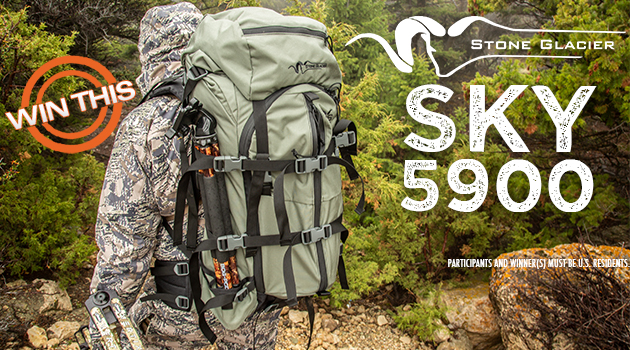
If you’re a sheep hunter you’ve probably heard of Stone Glacier and if you’re into ultralight backpack hunting you’ve also probably heard of them. These are great, simplistic packs that have been around awhile now and they continue to prove themselves in the field. Stone Glacier packs have always been built out of the most lightweight Cordura possible without compromising durability. All straps and buckles are really well thought out and serve a very refined purpose which make this one of the most efficient packs on the market. Specifically, the Sky 5900 pack comes with the XCurve frame and has a total weight of 5 lb. 8oz. Sign up for this giveaway by filling out the form below. Good luck!

Loading…

The post Stone Glacier Sky 5900 Giveaway appeared first on Eastmans' Official Blog | Mule Deer, Antelope, Elk Hunting and Bowhunting Magazine | Eastmans' Hunting Journals.

Copyright

© Eastmans


Outdoorsmen