Hunting and Fishing News Blog Articles

Stay up-to-date on hunting, fishing and camping products, trends and news.

Montana Grizzly and Wolf damages reach record high

With all the buzz in Idaho surrounding the topics of depredation and government spending. We see more of the same in Montana. Although numbers pale in comparison to Idaho’s crop payouts for elk depredation, we still see a substantial up-tick in the amount of money state agencies such as the Montana Livestock Loss Board are having to dole out to ranchers due to predator impacts on livestock. This number continues to increase and has been on the rise since the introduction of the Grey wolf. In fact, the MT Livestock Loss Board was created by the state legislature to specifically address losses from wolf predation in 2007. Although much of the blame lies at the feet of these apex predators. Statistics are showing a substantial increase in Grizzly bear predation as well. Between wolves killing for food, sport and whim and Grizzlies with an appetited to back up their waistline; depredation issues are not likely to slow anytime soon. According to the Montana Livestock Loss Board they surpassed last years (2018) losses by the time deer and elk season opened in the Treasure state. And with payouts just north of $260k, 2019 marks an all-time high for the Board of Loss. We can expect to see more of the same in 2020. Additionally, the total loss to sheep farmers in Montana was pretty much status quo in 2019, however, a new statistic that catches the eye is that of depredation on sheep from bears. Out of the $2.85 million dollars in predation losses coyotes account for $1.75 million, this comes as no surprise, but the bear numbers are up by a whopping 280 percent! That means bears killed 1,400 more sheep than last year! Bottom line, predator management is key, we as sportsmen and sportswomen must continue the pursuit of conservation. This money doesn’t magically appear, it is primarily funded by hunters, yet animal rights activists continue to force introductions of wolves, block delisting of Grizzlies and place a pile lot of red tape around management criteria for state agencies. All the while, we are picking up the tab!

The post Montana Grizzly and Wolf damages reach record high appeared first on Eastmans' Official Blog | Mule Deer, Antelope, Elk Hunting and Bowhunting Magazine | Eastmans' Hunting Journals.

Copyright

© Eastmans

Roll Over Teddy – Bison Culling in Yellowstone…

Did you hear that? The eerie restless noise coming from the location of Theodore Roosevelt’s grave? It is the sound of our beloved 26th President “rolling over in his grave.” I couldn’t help but think this when I read this recent article on the Yellowstone National Park bison herd (click here).

Many that are familiar with Yellowstone National Park, being the crown jewel of the National Park System, know of the abundance of wildlife in and around its borders. What many aren’t familiar with is how the National Park System was set up and what the actual intentions were when Theodore Roosevelt pushed for set-aside/refuge areas to preserve American lands from development and overhunting. 

Notice the last word in the previous sentence. It wasn’t two words spelling out ‘no hunting’, but it was overhunting. What many have forgotten is the status of our wildlife resources at the historical juncture of the late 1800s and early 1900s. In the midst of overhunting and uncontrolled market hunting at that time, wildlife resources were decimated across much of the country. Theodore Roosevelt and others recognized this and established the most successful wildlife management model the human race has ever seen, historically. The Boone & Crockett Club and the National Park System were both parts of this new strategy for managing and protecting our wildlife and land resources.

Fast-forward to 2020 and our federal employees tasked with managing the National Parks System, along with so many misinformed and fanatical antihunters, plus misinformed members of the public that don’t have a strong opinion either way on hunting, are making decisions that are cost-prohibitive and in opposition to the North American Model of Wildlife Conservation.

Continue reading

Copyright

© Eastmans

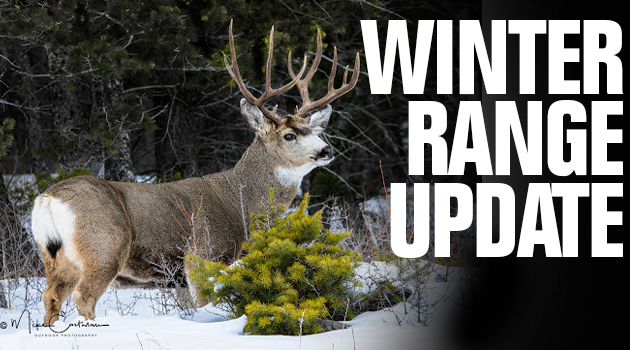
Saving WORLD RECORD Deer Migration – Make Winter Range Great Again!

Copyright

© Eastmans

Cougars Taking Over Colorado

In some areas, nearly half of Colorado deer and elk hunters reported seeing mountain lions or tracks while they hunted last year. One CPW supervisor told me an outfitter with 18 camps said that every camp reported seeing lions or lion tracks.

When hunters are seeing mountain lions, there are way, way too many lions. The problem is that it is not politically feasible for CPW to hire professionals to cull the lions and so they have to rely on hunters to do it but they are not seeing the harvest of lions they want to see. The result? Many areas with big reputations are not keeping their older deer class high enough to justify the points. 

For example, Unit 44 is one of the areas where seeing a lion is a real possibility. It takes a lot of points to draw 3rd and 4th season but the decline in trophy bucks in 44 has been much greater than people realize. The culprit seems to be too many lions, with bears not far behind. 

The official mountain lion estimate is 4,000 – 5,000 mountain lions in Colorado with a density of one lion for every 10 square miles (a square 3.16 miles long and wide). Not only is that probably low, but you can bet that the number in good habitat is much higher and if you glassed a mile or two in every direction, there were probably two lions in that circle.

Continue reading

Copyright

© Eastmans

Montana’s Drawing System Change

It’s that time of year again, time for Montana elk and deer applications again. The deadline has been March 15th for many years until this year. It will be bumped back two weeks to April 1st. The good thing is that the results will be available two weeks after the deadline! No holding on to your money for weeks and weeks anymore. This is a win-win for applicants and if you apply for multiple states out West, you will have the ability to plan your Montana hunting before nearly any other state results are available. 

In addition, you will be able to apply for all the species in Montana at one time. Once again, due to the workload relief from omitting paper applications, drawings and results will be easier and available sooner than years past. Also, Montana no longer offers paper applications. This gives FWP the ability to save massive amounts of time and money and get the draw results to you quicker. There still are two ways to get your applications in, one being online, inside your FWP portal and the second is electronically in person at any FWP office. 

Another change you will see is the transition away from mailing you your licenses and permits. Now, each person will be able to print their carcass tags from home on regular paper. If you are successful in a drawing, you will receive a link in your email to print your tags one time. 

These are huge money and time-saving changes for FWP but the hurdle I see is the downfall of waterproof carcass tags. When you print off your carcass tag I would highly suggest you store your tags in a sealed Ziploc bag and when you do harvest an animal, notch your tag, put it back in the Ziploc then attach it to the animal. As you know, computer paper won’t hold up to inclement weather, so keep your tags protected which will keep you protected if you get checked by a warden and have a tag that isn’t legible. I have yet to hear how they will prevent any counterfeiting from going on but I imagine this could be a hard one to regulate. 

Continue reading

Copyright

© Eastmans

Rifle Review Snowy Mountain Rifles

In this hunting rifle review Todd Helms pulls the Alpine Hunter rifle out of the box and is smacking steel at 1000 yards with only seven shots! The Alpine Hunter built by Snowy Mountain Rifles is a premium rifle with plenty of options to upgrade. The Alpine Hunter is guaranteed to shoot at 1/2 MOA or better! The rifle in this review features a Proof Research carbon barrel, Defiance Deviant Hunter action, Trigger Tech trigger and a custom SMR muzzle break.

For more gear review videos, don’t forget ot subscribe ot our channel. Tap the bell to get notifications so you never miss a new video!


The post Rifle Review Snowy Mountain Rifles appeared first on Eastmans' Official Blog | Mule Deer, Antelope, Elk Hunting and Bowhunting Magazine | Eastmans' Hunting Journals.

Copyright

© Eastmans

NEW Outfitter Ammunition from Hornady

Hunting involves rain, snow, and dirt! Is your hunting ammo up to the job? In this hunting gear review, Todd Helms puts the new Hornady Outfitter Ammo to the test on a cold Wyoming day. See how this weatherproof ammo performs after landing in the snow. Be sure to subscribe to our channel for more hunting gear review videos. Tap the bell to get notifications so you never miss a video from Eastmans!

Click to view slideshow.

The post NEW Outfitter Ammunition from Hornady appeared first on Eastmans' Official Blog | Mule Deer, Antelope, Elk Hunting and Bowhunting Magazine | Eastmans' Hunting Journals.

Copyright

© Eastmans

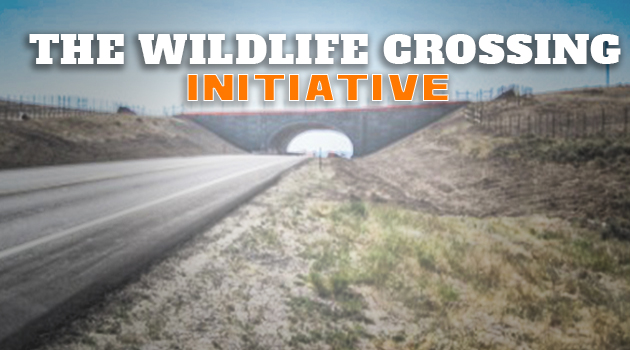
Forward Thinking In Wyoming – The Wildlife Crossing Initiative


With the push to protect migrating wildlife during the throes of their arduous journeys, Gov. Mark Gordon created an Executive Order around the Protection of Migration Corridors. With this order comes a focus on mitigating the estimated 6,000 big game animal deaths each year in Wyoming caused by vehicle collisions. 


Continue reading

Copyright

© Eastmans

THUMB in YOUR EYE!

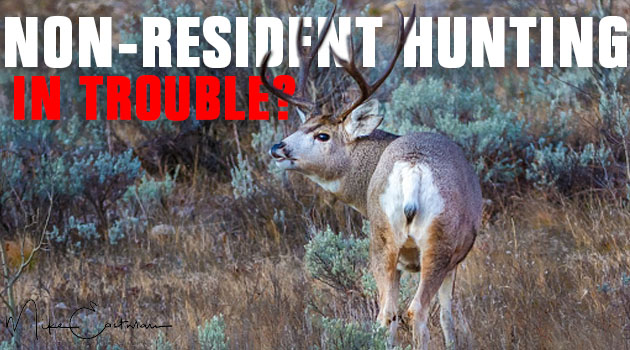
Wyoming Legislators Attempt To Burn Down Nonresident Hunters!

Some legislators in Wyoming introduced what seemed to be a very controversial bill regarding how Wyoming allocates and prices their big game licenses and tags. Senate bill SF0094 outlined a drastic change in license pricing and allocation for the 2022 hunting season. 

Although this bill did have bipartisan support it was DOA. As a rule of thumb, wildlife bills in Wyoming are not usually expected to be signed by the governor without the approval and recommendation of the Game and Fish Department leadership and Commission. Considering this bill could have created potential financial suicide for an already financially struggling department in a state that is seeing massive budget shortfalls, I think it is fair to say our Governor will not have added insult to injury financially by signing this bill, but it’s a good thing we didn’t have to find out. 

This could however be an ever so slight peek into the direction the state leadership is headed for the future of funding and allocating our wildlife and hunting licenses in the future. If you find yourself somewhat unfamiliar with this bill here is the basic outline of what this could have meant for the future of hunting in Wyoming.

Continue reading

Copyright

© Eastmans

NEW Wyoming Horn Hunting Regulations

Shed hunting has become more and more popular every year, and with more participants come more rules. In Wyoming, shed hunting season West of the continental divide begins on May 1st. There are many feed grounds in western Wyoming where elk congregate and shed their antlers. By May 1st many of these elk are dispersed or beginning to disperse back to summer areas. In multiple areas across the West, midnight of May 1st is a common start time for many shed hunting areas. Hundreds of people line up at the fence and wait for the official start of the race for horns. This is very difficult to enforce because people glass up sheds days prior and then sneak in before the official opening to claim their “horns”. 

Also, reports from many wildlife management areas across the West claimed that people are sneaking around these areas ahead of time caching antlers. When the opening day of shed season arrives, these people simply hike in to their hidden antler piles and haul out a backpack full of sheds ahead of the competition. 

The nature of shed hunting seasons with midnight openers makes it very difficult for law enforcement to patrol so Game and Fish has decided to bump up the start of the shed season from midnight to noon on May 1st. Their hope is to make the opener easier to patrol and make it more difficult for people to sneak in ahead of time under the cover of darkness. We’ll see how it works. This rule change has received equal praise and criticism from what I’ve seen. The most common argument is that shed hunters won’t have enough time to cover the ground they want to with the amount of daylight hours remaining after noon. Others, think it’s a great idea and will make the start of the season more transparent. I just have to shake my head, as more and more people cheat the system rules and regulations will become more and more strict. What do you think?

Click to view slideshow.

The post NEW Wyoming Horn Hunting Regulations appeared first on Eastmans' Official Blog | Mule Deer, Antelope, Elk Hunting and Bowhunting Magazine | Eastmans' Hunting Journals.

Copyright

© Eastmans

FOR the LOVE of MULE DEER! Wyoming Mule Deer Migration

Wyoming mule deer numbers have seen drastic change in the last fifty years. These western icons rely on migration between summer and winter range to survive. Threats to mule deer migration routes are real, but this is an issue we can overcome. Conservation can beat this. Let’s take action. We’re releasing a new film all about mule deer, migration and deer hunting. Don’t miss it! Be sure to subscribe to our channel and tap the bell to get notifications. We’ll let you know this new project drops!


The post FOR the LOVE of MULE DEER! Wyoming Mule Deer Migration appeared first on Eastmans' Official Blog | Mule Deer, Antelope, Elk Hunting and Bowhunting Magazine | Eastmans' Hunting Journals.

Copyright

© Eastmans

B.C. Moose Arrowed at 14 Yards!!

Go bow hunting for moose with Dan Pickar. Moose hunting in the timber of British Columbia is a game of patience in this Eastmans’ Hunting TV episode. Dan Brooks of Crystal Lake Resorts shares his tips for locating moose and calling to bring a bull in close!

The post B.C. Moose Arrowed at 14 Yards!! appeared first on Eastmans' Official Blog | Mule Deer, Antelope, Elk Hunting and Bowhunting Magazine | Eastmans' Hunting Journals.

Copyright

© Eastmans

2020 SHOT Show Roundup


Field Optics Research – Microlite FT-5017C

I’m always looking to cut space and weight in the backcountry and this is exactly why this tripod caught my eye. Upon handling it, the quality stood out to me. Precisely machined components and carbon legs all orchestrated with twist leg locks. This tripod weighs 1.74 lbs that folds down to 12-inches and extends solidly out to 50-inches. Load capacity is 26 lbs., perfect for your spotting scope or camera (with a fluid head). This is the most compact, lightweight tripod I’ve seen so be sure to take a closer look at www.fieldopticsresearch.com MSRP $199.99


Continue reading

Copyright

© Eastmans

WYOMING RANGE DEER UPDATE (Mid-Winter)

Buck to doe ratio and fawn recruitment up nearly 40% since 2017!!!

For some reason it sure seems like good news is hard to come by these days. So you can imagine my elation as this press release sat on my desk awaiting my return from the first round of shows this winter season. 

According to the Wyoming Game and Fish Department via my good friend Gary Fralick the Wyoming range biologist, things are beginning to look up for the Wyoming Range mule deer herd. 

So far this winter has been relatively mild in western Wyoming, at least on the northern two thirds of the winter range. With lighter than average snowfall and almost beyond mild temperatures, from a Wyoming standard at least, this winter is shaping up to be very favorable for our mule deer and antelope herds north of Interstate 80. Cross your fingers for continued mild conditions through the months of February and March, which can often be killers for our deer. 

Continue reading

Copyright

© Eastmans

Buck Drops Both Antlers at Once! Mule Deer Shed Hunting

Shed hunting takes skill just like deer hunting, but it takes luck to watch a mule deer buck drop both antlers at the same time! Watch this buck shedding antlers with a jump and a head shake.

The post Buck Drops Both Antlers at Once! Mule Deer Shed Hunting appeared first on Eastmans' Official Blog | Mule Deer, Antelope, Elk Hunting and Bowhunting Magazine | Eastmans' Hunting Journals.

Copyright

© Eastmans

ANTELOPE TEST! Weatherby’s ALL NEW Rifle (Hunting Gear Review)

Come along for a rifle hunting test with Weatherby’s Backcountry TI in this hunting gear review. This brand new lightweight hunting rifle by Weatherby harvests a public land antelope buck. Hunter Jake Helms is shooting the Backcountry TI in 6.5-300 caliber in this rifle review.

Click to view slideshow.

The post ANTELOPE TEST! Weatherby’s ALL NEW Rifle (Hunting Gear Review) appeared first on Eastmans' Official Blog | Mule Deer, Antelope, Elk Hunting and Bowhunting Magazine | Eastmans' Hunting Journals.

Copyright

© Eastmans

Animal Activists Target Ranchers Yet Again

January 21st activist groups presented their intent to sue the U.S. Forest Service within the next 60 days for allowing continued livestock grazing on roughly 170,000 acres in the Upper Green River Rangeland of Wyoming. This seems to be a growing trend with animal rights advocates as we see legal action like this more and more across the West in the name of animal rights. Yet facts show something more is in play than animal rights, anyone willing to take a minute and learn the facts will see that most of the wildlife behind the conflicts are doing quite well. The grizzly bears in this particular conflict live in the Greater Yellowstone Region and they are thriving! Which brings us back to the Upper Green River Rangeland Project. This rangeland area has been under analysis since 2004, habitat is prime for grizzlies and is also grazing land for ranchers. The basis of the activists’ argument is that the ESA (Endangered Species Act) requires/demands protection of the bears as a higher priority than that of the habitat and overall welfare of the livestock/ranchers as well as the individuals who then consume these resources as an end product. The baseline issue revolves around the inevitable conflict between bears, livestock and humans, which will in some events result in the removal of problem bears by either relocation or lethal means. This conflict could otherwise be minimized if the grazing permits for this area were revoked and the ranchers were no longer allowed to use this resource. Now let’s rewind back to 1897 when the U.S. Forest Service was officially enacted by Congress; from the inception of the Forest Service/public lands, the U.S. Government has provided ranchers access to these lands, by means of grazing permits. In 1905 the agency stated the following points were the leading objects for grazing regulation:

The protection and conservative use of all forest reserve land adapted for grazing.The best permanent good of the live-stock industry through proper care and improvement of the grazing lands.The protection of the settler and home builder against unfair competition in the use of the range.

This and many other supporting documents clearly indicate the desire of the US government and the Forest Service to support the public land grazing which is not only a precious resource for the ranchers but also provides a valuable resource to the American people. Substantial amounts of the beef that crosses your dinner table spent time grazing these hills for sustenance prior to finding its way to your home. This process has been taking place for well over 100 years and has provided a very necessary service to the American people. 

After closer review, we see an argument with two driving directives. The ESA states the bears’ lives are the primary driver no matter what the cost of preservation, vs. the USDA Forest Service policies uses the habitat as the driver allowing for mixed use when managed effectively. Both are important drivers; however, you cannot have animals without properly managed habitat, thus concluding habitat management in balance with economic resources such as cattle provides the best use for the greater good of the resource. Meanwhile, wildlife whether ESA protected or not, are able to coexist with minimal and manageable conflict.
The combination of ranchers, cattle, horses and bears has been analyzed thoroughly over the past 15 years in the Upper Green River Rangeland Project area. The U.S. Fish and Wildlife Service released data back in April 2019 that shows the current grizzly population (roughly 700 bears) can handle as many as 72 bears being removed from the “Greater Yellowstone Region” over the next 10 years. In the event the 72 bears are lethally removed the current grizzly population should not suffer. 

Keep in mind this is all coming on the heels of the recent delisting of the grizzly bear from the endangered species list. Which was scientifically backed by facts brought to the courtroom by biologists and conservationists using science rather than opinion. Yes, this delisting was temporarily stopped by a federal judge, but facts are facts and grizzlies are currently doing very well in this region. At the end of the day, how do we answer/deal with these conflicts? Many of us have seen overgrazed habitats from cattle and sheep and the ill effect it can have on our big game and upland birds. In the same breath, we can attest to the real benefit it can have as well, from reducing undergrowth that would otherwise become fuels for wildfires to the economic and food resource it brings to the blue collar American. As always, balance is necessary and being an active sportsmen/conservationist is a necessary step for the future of our hunting, fishing and outdoor activities.


Continue reading

Copyright

© Eastmans

Collecting Grizzly Claws

“What are you doing here then?”

“I hunt griz…”

“Griz?”

“Grizzly bears, pilgrim!  I collect the claws.”

Continue reading

Copyright

© Eastmans

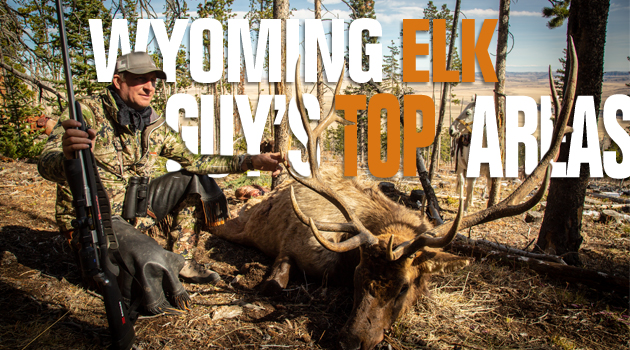
Guy’s Top Wyoming Elk Areas 2020 Edition

The elk hunting in Wyoming continues to be very solid. The 2018 and 2019 seasons posted solid elk hunting results with about average hunter success while not setting any records, the hunts were average nearly state wide. The late and record setting cold spring did put a bit of a damper on our antler growth this past year. Many units, while seeing success rates hold very solid, did see slight dips in average growth last year. The desert units saw slightly reduced growth measures as well leaving many who drew the very best tags in the state wondering, “where are the giants?” 

So far, our winter has been extremely mild in the Northern two thirds of the state, leaving most of us with high hopes for the 2020 hunting season. If the trend continues and we can manage to get good moisture up high and down low during the spring and summer, this could be a very solid year for Wyoming’s elk. 


Continue reading

Copyright

© Eastmans

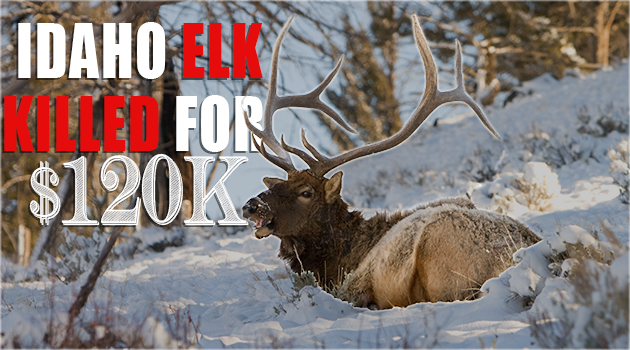
Sportsmen Paid 120K For IDFG To Shoot Elk


That’s right, $123,241 dollars funded by sportsmen to be precise. The other 250K (roughly) for the research/project was Federally funded. Over the course of several months IDFG (Idaho Dept. of Fish and Game) tested methods for decreasing elk depredation on crop lands across southern Idaho. During this time, IDFG staff/employees shot 206 elk, often during the night using “sharpshooting” as their primary method of dispatch. 

Once the animals were shot, they were then field dressed and hauled to a freezer and eventually taken to be processed and donated to charity. After word hit social media, sportsmen and women from all over the country were up in arms asking questions such as: Why didn’t we get an opportunity to help, or why are we spending money on “research” for elk depredation issues on land that we can’t even hunt? 

After being bombarded with questions IDFG released a statement on the situation. No matter how you slice it, things are sticky on this topic, but it’s not all bad. Let’s start with elk populations that are over objective and primarily living on and destroying private land crops, which subsequently get State funded reimbursements for the damage… that’s right, State funded reimbursements. Which is another way of saying hunter funded reimbursements. 

Continue reading

Copyright

© Eastmans


Outdoorsmen