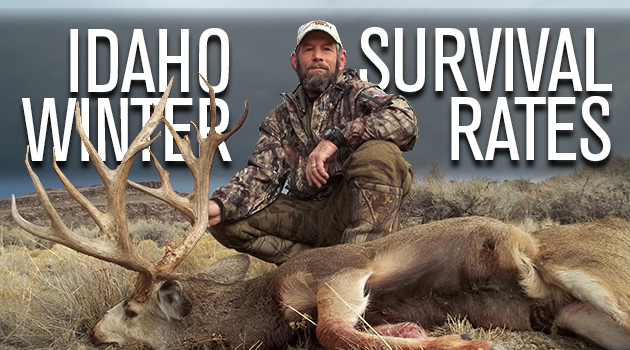
The past winter was hard on the deer herds. Snowfall in most areas was well above the average, and the storms made more difficult browsing for the deer. In response, each spring, Idaho Fish and Game captures and collars does and fawns across the state. This monitoring provides vital, real-time information allowing biologists to react to changing herd sizes quickly. Fawn mortality was expected to be extremely high in some areas. In response, Fish and Game eliminated antlerless general season hunts in the following units: 48, 49, 52, 66A, 68, 70, 71, 72, 73, 73A, 74, 75, 76, 77 and 78.
Idaho Fish and Game seemed to fear the winterkill would devastate deer herds. These fears were well founded, as fawn survival rate was the second-lowest seen in 20 years. However, the mortality was much lower than early projections.
About 30% of radio-collared fawns and 90% of collared does survived the harsh conditions last winter with deep snow and frigid temperatures on low-elevation winter range.
In the past 19 years, the lowest survival rate was in the 2010-2011 winter, when only 26% of collared fawns survived. Over this period, the average survival rate has been 57%, almost double the survival from this past winter. Although not the worst season on record as some expected it to be, last winter definitely did some lasting damage to mule deer herds going forward.