
Hunting and Fishing News Blog Articles

Stay up-to-date on hunting, fishing and camping products, trends and news.

Wyoming Mule Deer Are Rebounding!

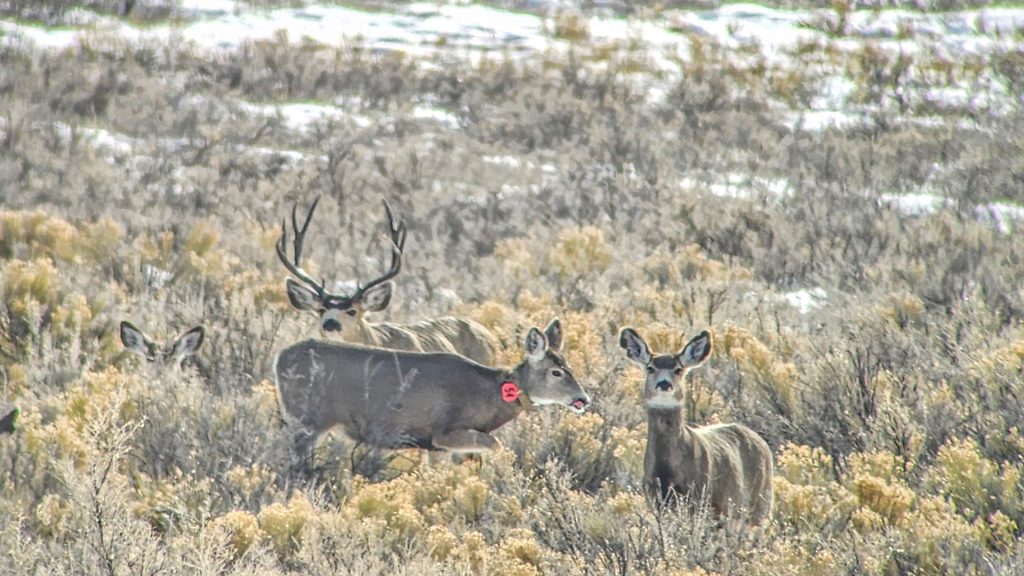
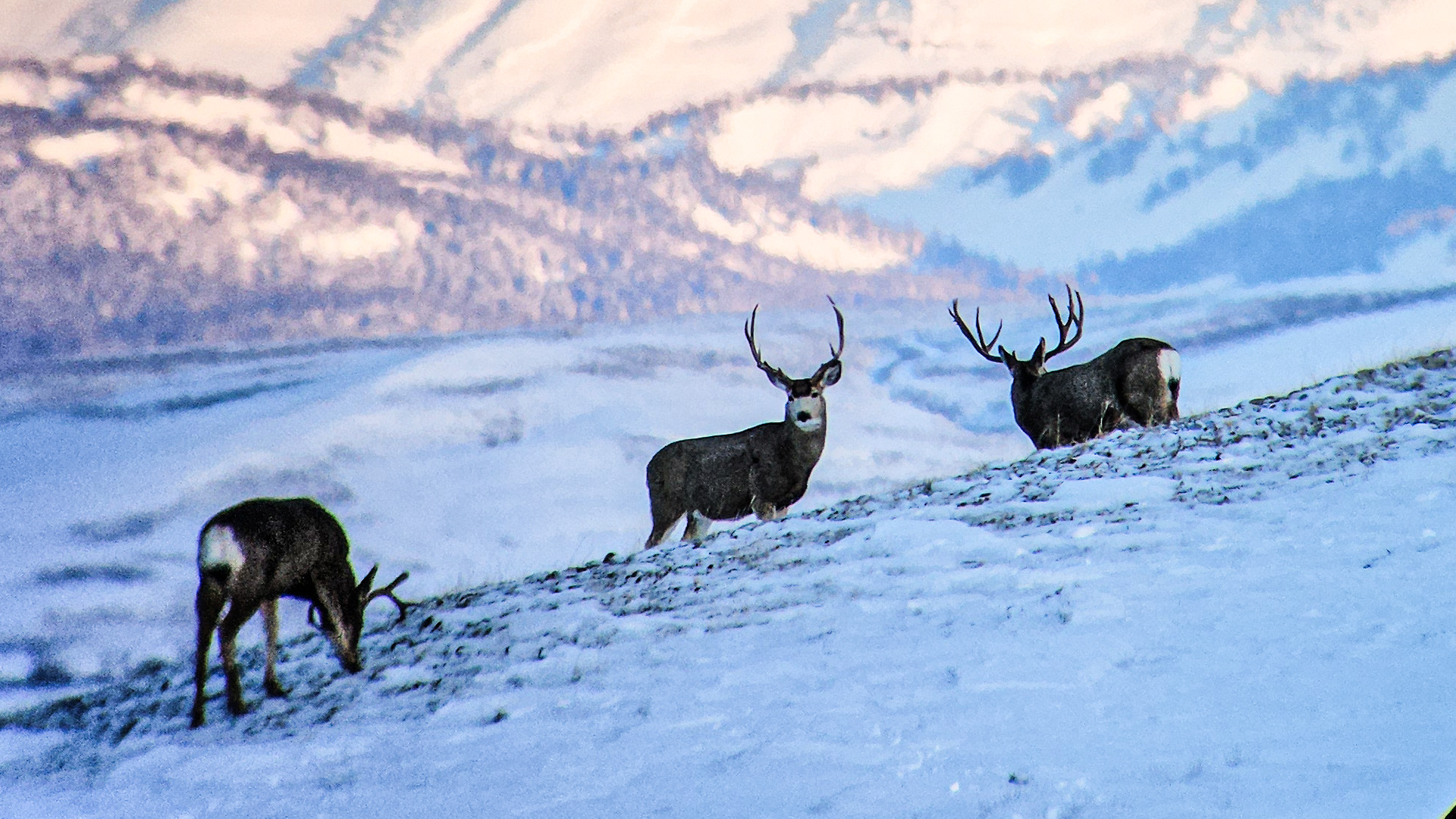
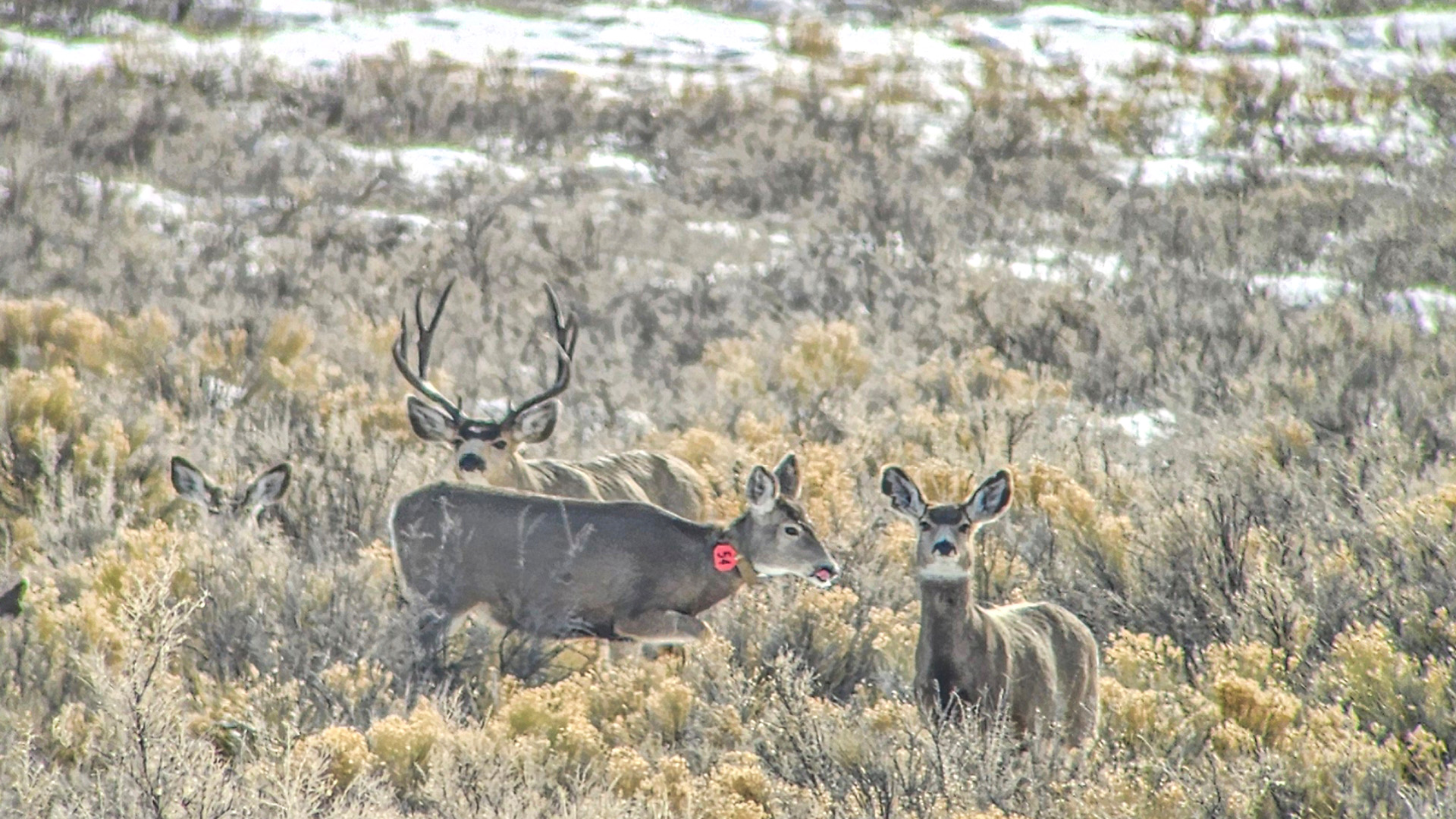
Recently the Wyoming Game and Fish Department released an update on their annual observational flights of the famed Wyoming Range and Sublette mule deer herds. These wintering deer largely make up what nonresidents know as Regions G and H – Wyoming’s classic high-country deer hunting areas. 

The Wyoming Range, in particular, felt the brunt of the losses from the winterkill two years ago with an estimated 80% of the deer lost from December until winter loosened its grip. The estimated number of deer went from 30,000 in December of 2023 to 11,000 the following December (which included a new fawn crop). Luckily, the incredible snowfall and continued precipitation turned into some of the best groceries for those deer to rebound on, and this year’s flights showed it. 

Game and Fish agencies across the West do surveys like the ones in western Wyoming to keep track of how many fawns are growing into the population, as well as maintain a specific buck ratio. In this part of Wyoming, however, surveys and studies have been even more intensive as these iconic deer herds steadily declined from a big peak of around 60,000 animals in the early 1990s. Especially after the hard winter of two years ago, WGFD has kept flying to get a more accurate read on how the deer herd is trending.

While the Wyoming Range herd is far from the numbers of individual deer from the 1990s, biologists say the fawn recruitment was as good as they had seen since the heyday of deer some 35 years ago. The 83 fawns per 100 does they saw from the air was only rivaled by one year since the historic peak in 2000. That means that on the backside of one of the most devastating winters, the habitat in the Wyoming Range provided the best fawn production since those winter ranges got cell service. 

Continue reading
  562 Hits

More “Ballot Box Biology” ??? Gotta Love Legislation Season

Photo Credit: Wirestock

Does this language in a current state legislative bill give anyone else pause besides me?

“The department may not adopt a rule or implement a policy prohibiting or restricting the use of…”

The department in question on this bill happens to be the North Dakota Game & Fish Department, but that is a moot point. So is the topic in the bill related to wildlife management and hunting, in my opinion (bill in question is SB2137) the real sticking point on this and other bills in so many legislative sessions around the country, during this time of year, is that wildlife management issues are continuing to be legislated and/or passed through the ballot box in election cycles. States like Colorado, Washington, and even Wyoming have been involved in nonsense such as this, trying to put wildlife management issues to a vote rather than allowing wildlife management professionals to do their job.

As a former wildlife management professional, I have always taken issue with politics getting in the way of sound wildlife and land management. Part of the North American Model of Wildlife Conservation includes educating and trusting state game agency professionals to manage wildlife based on their experience, science, carrying capacities of the landscape, disease outbreaks, etc.

Don’t get me wrong…I don’t ALWAYS agree with agency mindsets, but there is a process for us sportsmen to voice our opinions and concerns and affect change through game & fish advisory board meetings, game & fish commissioners, attending public meetings to ask questions and voice concerns, provide public comment during periods of official public comment on proposed management changes, and so on.

Continue reading
  364 Hits

Colorado: Sweeping Restrictions on Semiautomatic Firearms Move Forward

Photo Credit: FabrikaPhoto

Colorado lawmakers are one step closer to passing SB25-003, a sweeping gun ban on semiautomatic rifles, shotguns and pistols. 

Last Friday, the Colorado Senate passed SB25-003. This bill initially called for a ban of virtually any semiautomatic firearm with a “detachable magazine.” But as it moved through the Senate, it was softened up with some amendments, including exceptions to allow for hunters to keep buying some semiautomatic firearms, such as semi-auto shotguns for waterfowl hunting, etc. The exception is for people who complete a training course to be regulated by and offered through the state.

The exemption, tacked on by Democrats in an effort to appease Gov. Jared Polis, represents a significant watering down of the measure. But proponents of the legislation felt it was needed to advance Senate Bill 3. The bill is now before the Colorado House, and if (when) it passes and reaches the desk of Gov. Jared Polis, the governor has signaled he will sign the bill into law.  If signed, it would take effect in September.

To qualify for the exception, a gun purchaser would have to be vetted by their local sheriff through a process similar to what’s required to obtain a concealed carry permit. Then, if they already have a hunter safety certification, they would have to complete a roughly four-hour training course to be offered by a third-party vendor. Without a prior hunter safety certification, a purchaser would have to complete a dozen hours of training over two days.

The course would focus on gun safety and specifically semiautomatic weapons. It would also include information about gun deaths associated with mental illness and Colorado’s red flag law, which lets a judge order the temporary seizure of guns from someone deemed an imminent risk to themselves or others. Eligibility for the exemption would be contingent upon people receiving a score of at least 90% on a test at the end of their training course. Sheriffs would issue cards verifying completion.

Continue reading
  426 Hits

3 Wild Red Stags in 3 days! Bow Hunting New Zealand | Beyond the Grid Eastmans’

Bow hunt wild red stags in New Zealand with Eastmans’ Dan Pickar. Hunting red deer in April is just like hunting elk in September. Maybe even better! After traveling around the world, Dan and his wife arrive at the peak of the red stag roar. The action heats up when the hunters get covered up in stags fighting over hinds in estrous. Dan uses his years of experience from the western elk rut to find success using calling, plus spot and stalk strategies to put three mature, wild, free-ranging red stags on the ground in this episode of Beyond the Grid by Eastmans’.

The post 3 Wild Red Stags in 3 days! Bow Hunting New Zealand | Beyond the Grid Eastmans’ appeared first on Eastmans' Official Blog | Mule Deer, Antelope, Elk Hunting and Bowhunting Magazine | Eastmans' Hunting Journals.

  479 Hits

Colorado Following California To Eliminate Coyote Hunting?

Photo Credit: harrycollinsphotography

You may have read another Eastmans’ Blog about California possibly eliminating coyote hunting. The California Fish and Game Commission Wildlife Resources Committee (WRC) is proposing a change to prohibit the take of nongame mammals except per California Fish and Game code 4152.  This would move the take of coyotes into the “depredation” category which would mean if you’re a rancher you must wait for a coyote to attack your cattle/sheep before you are legally able to shoot it.  

Proposals like this have some folks rightly concerned about Colorado Parks and Wildlife (CPW) recently eliminating a provision which allowed coyotes to be taken without a license during any big game season provided that the hunter has an unfilled big game license for that season and unit. 

Is Colorado following California’s lead to eliminate coyote hunting?  Thankfully no … Colorado is NOT eliminating coyote hunting (or following California’s lead which is almost always bad).

What CPW did was eliminate the provision discussed above allowing coyotes to be taken without a license during any big game season and change: Article I, General Provisions, #304 – License Requirements: to read “A small game license authorizes the take of coyotes, and those species defined as small game, except wild turkey.” 

Here’s how CPW explains, “Removing the ability to take coyotes by a hunter with an unfilled big game license”: For many years, big game hunters with unfilled big game license could take coyotes under a provision allowing harvest during the season with the same method of take as their big game license. Removing this provision will clean up regulation by removing a secondary redundant method, to take coyotes during big game seasons. This is redundant as a strong majority of big game hunters already possess a small game license either as a qualifying license or because of their additional interest in hunting small game. 

Continue reading
  455 Hits

Montana Poachers Plead Guilty to Fish and Wildlife Violations

Photo Credit: harrycollinsphotography

You’re not going to believe this one! It started in August of 2021 when FWP discovered several large fish at Giant Springs fish hatchery display pond had been speared. Several of the dead fish were left at the scene and other survivors were later euthanized. Sounds like a weird instance right?

Later in September wardens got a report that someone had shot and abandoned a bull elk on a ranch near Cascade. The head and the antlers were removed and the body was left to rot. During the course of the investigation wardens had discovered that three bull elk and one black bear had been taken illegally as well. Tips from the public led wardens to Richard Van Meter and Ty Robert Lewis, who confessed to the crimes. 

The case took two years and each were convicted with Lewis paying $16,000 in fines and Van Meter paying $8000 in fines. Both men will lose their privilege to legally hunt, fish and trap for 20 years. This is one of the stiffer penalties we’ve seen in the last several years for poaching incidences. 

Remember, if you have a tip on a wildlife violation you’re encouraged to visit tipmont.mt.gov for up to a $1000 reward for information leading to a conviction. 

Continue reading
  357 Hits

Wyoming Kills Three Controversial Predator Bills—What It Means for Hunters

Photo Credit: harrycollinsphotography

Three Wyoming large carnivore-related bills widely discussed in media and hunting outlets (like the one you are currently reading) died in the Wyoming State Legislative General Session last week. 

The Cowboy State’s legislators voted against the HB0186 – Bear coupons-game and fish on the House side on February 4th. This bill, after amended in Committee, would have provided a grizzly bear tag with every resident elk tag (yes, grizzly bears are still listed in the ESA). The House Travel, Recreation, and Wildlife Committee took no action on HB0286 – Mountain lion hunting season-changes on the 7th of February. That bill aimed at making it open season year-round on mountain lions with the option to trap or snare the large cats. Lastly, SF0170 – Grizzly bear management prohibition did not make it to the floor of the Senate before the cutoff date on February 10th. The Grizzly bear prohibition bill prevented WGFD officials from doing any management, except for depredation analysis for damage payouts related to grizzly bears until the bear is delisted. 

For each of these bills, sporting groups working in the Capital fought to ensure they did not proceed any further on the basis of “ballot box biology”, instead of state-led science based management. The argument has been one on many hunters’ lips for removal of carnivore hunting opportunities, like you saw with mountain lions in Oregon in 1994; in Washington removing spring bear hunting season, and most recently, with a ballot measure to end hunting cougars with dogs in Colorado. However, on the other side of the coin, these bills were aimed at encouraging lower populations of large carnivores, or making a statement to the federal government to delist the grizzly bear.

While it’s impossible to know precisely the intent of the bringers of the bill, from the outside looking in, legislators opted to take no action because these bills were more ingrained in political message to agencies, both federally and at a state-level, regarding large carnivore management, than the actual passage of law. 

Continue reading
  620 Hits

2025 Colorado Hunt Planning

Photo Credit: Mumemories

It’s that time again, time to plan your Colorado Hunts for next fall!  The application deadline is April 1st (8 p.m. Mountain Time) for 2025 and Colorado Parks and Wildlife has published the new 2025 Brochures to get you started. 

Here’s a link to the 2025 Colorado Big Game Brochure:  https://cpw.widen.net/s/5wvx7rggrd/colorado-big-game-hunting-brochure

Here’s a link to the 2025 Colorado Sheep & Goat Brochure: https://cpw.widencollective.com/assets/share/asset/z2h9subprn

Be sure to check-out the “What’s New: 2025” on the first page of both brochures to see the changes for this year.

Continue reading
  782 Hits

CPW Gray Wolf Reintroduction Effort Update

Photo Credit: kjekol

On Saturday, January 18, 2025, Colorado Parks and Wildlife (CPW) successfully completed the second year of gray wolf reintroduction efforts as part of Colorado’s Gray Wolf Restoration Plan. CPW now has additional high-resolution photos and b-roll footage of that effort featured in a media kit on its website.  Images can be downloaded easily through the platform and all information such as usage rights, copyright, credit/provider, caption description and alt text for each image is seamlessly provided for each file. 
Click here to view the media kit for the 2025 CPW Gray Wolf Capture and Release Effort.

Range Riders
CPW has received more than a hundred applications and is working to contract 12 range riders for the 2025 on-range season (late April to the end of September). To date, CPW and the Colorado Department of Agriculture have nine range riders who have accepted offers to work in the Northwest Region. Once all positions have been filled, CPW and CDA staff members and any contract range riders will undergo specialized training to create a team of trained range riders with connections to local communities who can be deployed to support producers at short notice.

It’s important to remember that range riding is just one tool in the toolbox available to producers. CPW will continue to work with producers to ensure they have the appropriate non-lethal tools that work for their operation to reduce the potential of conflict where wolf activity is or could be.

Wolf movements
Wolves can and do travel long distances. Recent wolf collar data shows that one wolf has made broad movements into the western portion of Mesa County. Collar data shows another wolf has made movements into Park, Teller and Fremont counties. As wolf population numbers grow, some wolves will migrate to establish new territories. 

Wolves are habitat generalists, meaning they can thrive in a wide variety of environmental conditions and habitats. As long as prey is available, wolves can use a variety of areas. It is anticipated that wolves will expand their distribution throughout the state widely over time. CPW field staff inform local area producers when wolves are spending time in an area and work to establish site assessments to identify and deploy deterrence measures.

CPW relies on sightings from the public to let us know if other wolves are being seen on the landscape that have migrated in from other states. CPW recently confirmed that a scat sample from the northwest corner of Moffat County tested positive for wolf DNA, meaning there is at least one uncollared wolf on the landscape in our population estimate that was not part of the agency’s reintroduction efforts. CPW provides important information for the public to learn how to spot the difference between a coyote and a gray wolf on our website. The gray wolf in Colorado is protected by both the federal Endangered Species Act (ESA) and state law. 

CPW encourages anyone who believes they have seen a wolf to fill out the wolf sighting form found on our website. In addition to the wolf sighting form, members of the public can also find information on living and recreating in areas where wolves live.

Additional Resources
In early January, CPW published a Wolf-Livestock Conflict Minimization Program Guide that provides information on a variety of tools and methods available for livestock producers to employ in efforts to reduce the likelihood of wolf-livestock conflicts and establishes a framework for CPW’s response, along with available support from other state, federal and non-governmental organizations. More information about Living with Wolves is available on our website.  

The post CPW Gray Wolf Reintroduction Effort Update appeared first on Eastmans' Official Blog | Mule Deer, Antelope, Elk Hunting and Bowhunting Magazine | Eastmans' Hunting Journals.

  591 Hits

Grizzly Bear Meetings Cancelled

Photo Credit: byrdyak

“Public Meeting Update: In light of the recent transition and the need for this Administration to review the recent grizzly bear proposed rule, the Service is cancelling all four of the public meetings and hearings that the agency voluntarily scheduled on this proposal.” USFWS

Not that the cancellation of these meetings is a surprise but I do believe it’s a step in the right direction of delisting Lower-48 grizzly bears and returning management to the States. As is the case any time a presidential administration changes hands, there will be lots of moving and shaking leading to changes that may only last four years. If they happen at all. 

Delisting of Lower-48 grizzly bears needs to happen; for the bears, for the people living in grizzly country and for the integrity of the Endangered Species Act. However, I fear an executive order won’t be enough as any decision handed down will be challenged in the courts. 

Do I think that changes are necessary and inbound? Yes. Do I think it will be a simple and straightforward process? No. 

Continue reading
  281 Hits

Wyoming: No Closed Season On Cougars?

Photo Credit: Wirestock

Like hunting mountain lions? You may be able to get after them year-round with no limits statewide in Wyoming with the passage of HB0286, a bill that was introduced in the Legislative Session this week. You just may not find any to chase after a few years of its implementation.

HB0286 – Mountain lion hunting season-changes recently was introduced to remove mortality limits and season dates on cougars in Wyoming. If it were to pass, the language in the bill would remove mountain lions from the umbrella of game species that are managed by zones and areas from the Wyoming Game and Fish Commission.

The Cowboy State’s big cats are currently managed on a local level with different areas of the state offering different season dates, mortality limits, and even tag prices to encourage the killing of additional mountain lions. 

For instance, there is a 365-day season with an unlimited mountain lion mortality limit from Casper to the Montana line east of I-20 until you hit the Black Hills. For 11 hunt areas (mostly the southern and eastern parts of the state) local management looks includes reduced-price 2nd tags for mountain lions to encourage lion hunters to take two cats and hit mortality limits where they exist. The rest of the state is a hodge-podge of year-round and fall-winter seasons with limits depending on what members of the local public and biologists on the ground agree are goals for mountain lion populations in the area. 

Many of these seasons fluctuate and change with biological information or the desire from the public to increase or decrease mortality limits. For instance, in the wake of the hard 2022-2023 winter, mountain lion hunt areas near the Wyoming Range were given increased limits thanks to large public support for it.

Continue reading
  389 Hits

Wyoming: “Bear Coupons” Making A Statement

Photo Credit: byrdyak

Earlier this week, the Wyoming House Agriculture Committee passed along bill HB0186–Bear Coupons-game and fish to be voted on the floor with a narrow 5 to 4 vote. This bill, originally written to provide bear tags to every resident who purchased an elk tag, found itself with a lot of attention from bear hunters and sporting groups alike for the disruption it would cause to the current system for bear hunting in Wyoming and lack of science-based management behind it.

Currently, about 4,000 Wyomingites buy bear tags for the spring and fall seasons with a 10% harvest rate. This bill would provide a free tag to the over 60,000 elk hunters, giving them the chance to take home a black bear incidentally while elk hunting in the fall. The bill makes this only valid outside of the greater Yellowstone ecosystem recovery zone as established by the United States Fish and Wildlife Service. 

Interestingly, grizzly bears (yes, still currently on the endangered species list) are included in this bill. The result would be a system much like the trophy and predator zone combination for gray wolves in Wyoming, though this bill requires notification of the Wyoming Game and Fish Department if a bear were taken on one of these coupons. 

Faced with strong opposition from bear hunters and those who want to see science-based management of wildlife, the Committee members deliberated amendments to the bill on Thursday and revised the original bill. When the dust settled, an amendment to only include grizzly bears on the coupon bill, not black bears, came through on the committee’s vote. 

Continue reading
  334 Hits

Open Season on Wyoming Lions and Bears A Bad Thing?

There’s a lot of talk around the West right now, largely due to current legislative proposals, about shaking up apex predator management by eliminating or vastly liberalizing harvest, such as eliminating quotas and creating open seasons on predators such as mountain lions and bears. Utah opened the door for this last year by allowing year round mountain lion harvest in hopes of mitigating the downward spiral of their mule deer herds. 

This legislative chatter generates conversation about predator management and there’s been pushback from the hunting community around unlimited lion and bear harvest. Many arguing that this is a step backward, will negatively impact predator numbers and give the hunting community a black eye. I don’t agree and here’s why.

Incidental take of predators such as lions and bears is extremely low. I am blessed to spend a lot of time in the field each year and I used to spend even more before I got married and had children, I can count on exactly four fingers how many opportunities I’ve had to take a lion or a bear while engaged in other activities such as elk hunting or fishing, with really only one being a high percentage chance on a lion. I didn’t have a tag on the only good opportunity I was presented and it taught me a lesson about having valid tags for predators in my pocket but another chance has never materialized.

For a concrete example let’s look at Utah who legalized year round mountain lion harvest in 2023 and has no plans to change their approach at this time. 

“We didn’t want to make any drastic changes and collect data for another year and then make some determinations about how those legislative changes and how our rule changes last year are impacting cougar harvest…” 

Continue reading
  564 Hits

California: No More Coyote Hunting?

Photo Credit: harrycollinsphotography

Since September 2023, the California Fish and Game Commission Wildlife Resources Committee (WRC) has been mulling over changes to the take (to hunt, pursue, catch, capture, or kill; or the attempt to do the same) of nongame mammals within California.  The committee has discussed the “concerns with, and the regulatory framework for, the take of nongame mammals” multiple times since September 2023 with the most recent being January 15, 2025.  

At these meetings, the WRC has brought up the “issue” of indiscriminate take of nongame mammals.  They also brought up the “appropriateness of allowing the indiscriminate and unlimited take of native California species.”  Nongame mammals in California (according to the WRC document linked below) include species such as opossums, cottontail rabbits, raccoons, coyotes, red foxes, weasels, moles and ground squirrels.  Right now, The California Code of Regulations Title 14 (14-CCR-472) states “nongame birds and mammals may be taken at any time of the year and in any number”.  The WRC wants this to change.  

The change they are proposing is to prohibit the take of nongame mammals except per California Fish and Game code 4152.  That code states, in summary, that if those animals are found to be injuring growing crops and other property, they may be taken at any time or in any manner in accordance with FGC 4152.  This would move the take of these nongame mammals into the “depredation” category.  If you are a rancher and you see a coyote running across your field, you must wait for it to attack your cattle before you are legally able to shoot it.  This is an UNBELIEVABLY BAD idea and will be detrimental to ranchers/farmers and an already suffering ungulate population.  

In California you can barely hunt black bears and cannot hunt wolves, mountain lions, and bobcats.  To put more protection on a predator (which does not need it) is ridiculous.  You make it impossible for species like mule deer, pronghorn, elk, and other small game mammals to thrive.  California has completely lost its ability to effectively manage its own resources.  This is yet another attack on our hunting.  This will not be the last time this is tried throughout the West.  

Continue reading
  819 Hits

Shed Hunting License Proposed in Montana

House Bill 353 was recently introduced which starts off calling for a shed hunting license if you want to pick up any kind of naturally shed horn/antler off public land. Dead heads appear to be excluded from this classification. Bighorn sheep are specifically excluded from this classification as long as it is dead with the skull and horns brought out together. The fee would be $10 for residents and $50 for nonresidents. 

A license is not required for a landowner or the family of the landowner nor any employees of a landowner for collecting of natural shed antlers or horn on said landowners land. Considering the price of brown deer and elk antlers these are very small fees in the grand scheme of things. I will keep you updated on future developments of this bill. 

In addition this bill adds the requirement of a conservation license as a prerequisite for any license sale for any shed hunting, application or bonus point purchase, hunting, trapping, or fishing license in the State of Montana. The fee is currently $8 for a resident and $10 for a nonresident.

Link

Continue reading
  631 Hits

Hunting the Whitetail Rut in Montana | Eastmans’ Hunting TV

Hunt rutting whitetail bucks in November with Ike Eastman and Silencer Central’s Brandon Maddox. The guys have timed their arrival in Montana just right as the rut action is heating up! They are covered up in deer. It becomes a game of patience as Brandon holds out for an older, mature deer on this episode of Eastmans’ Hunting TV. This hunt was hosted by JD Stensland and Circle S Outfitters.

The post Hunting the Whitetail Rut in Montana | Eastmans’ Hunting TV appeared first on Eastmans' Official Blog | Mule Deer, Antelope, Elk Hunting and Bowhunting Magazine | Eastmans' Hunting Journals.

  349 Hits

COMING SOON: Mystery Ranch’s NEW Mysterium Packs for Hunting

This review features the Mysterium line of backpacks built by Mystery Ranch. Eastmans’ Scott Reekers runs down all the features of these versatile packs available in a size to conquer any adventure you can dream up, from day trip to multi-day excursions. Improvements include new straps on the interior and Guide Light Frame for better securing heavy loads on the overload shelf. These packs also boast a wrap-around zipper and water shedding Robic Kodra Ripstop fabric. The Mysterium series includes; Sawtooth 45, Sawtooth 65, Beartooth 85 and Marshall 105. 

The post COMING SOON: Mystery Ranch’s NEW Mysterium Packs for Hunting appeared first on Eastmans' Official Blog | Mule Deer, Antelope, Elk Hunting and Bowhunting Magazine | Eastmans' Hunting Journals.

  533 Hits

Winter Range Update for 2025

In early January 2025 I had the opportunity to spend some time on the famous winter range of southwestern Wyoming, just like I have in recent years.

In 2024 I took a year off due to the sheer devastation of the 2023 winter, seeing a die off of over 80% of the deer herd due to the worst winter on record since the late 1940s.

This year the winter range looked much different than it did at roughly the same time in 2023. 

The amount of snowfall in the area was substantially less in 2025, as of the time of filming/photographing.

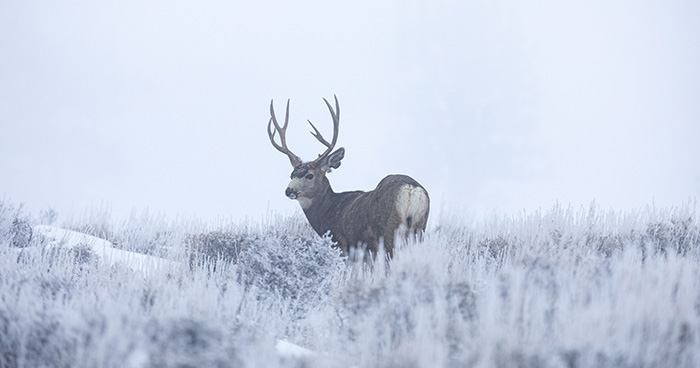
I saw an encouraging number of does and fawns, as well as the anticipated amount of “up and comer” bucks in that 150”-170” class. I was pleasantly surprised at the overall number of deer I saw and if the winter continues to be somewhat mild, the outlook for Regions G, H, and other surrounding areas could be promising for the fall of 2025 and especially for the fall of 2026.


Continue reading
  461 Hits

Federal 7MM Backcountry: A Hunter’s Perspective

There’s been a lot of chatter on the interwebs and social media about Federal’s new 7MM Backcountry since it was released. I had the honor to shoot, test and hunt with this new round over the past fall and have some thoughts from a hunter’s perspective on the 7MM Backcountry. 

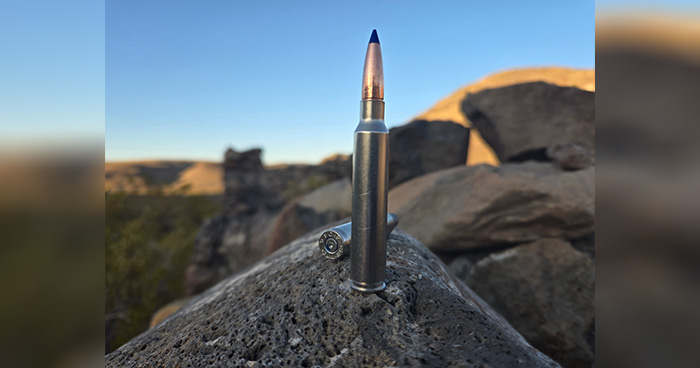
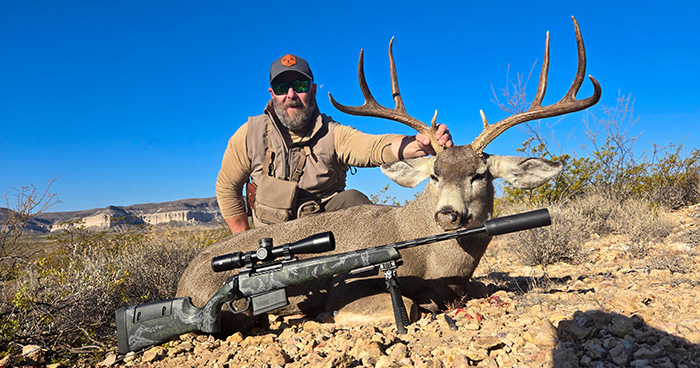
First a bit of technical data to bring Federal’s new round into focus. . . The 7MM Backcountry pushes 170 grain class bullets from a 20” barrel to 3000 fps and beyond. From a 24” barrel the speeds are in the neighborhood of 3200 fps. The pair of test rifles I shot were a Weatherby 307 Range XP 2.0 and a PROOF Glacier Ti, both with 20” barrels which I exclusively shot suppressed. I tested Federal’s 168 grain Barnes LRX load and both rifles recorded speeds over 3K. The Weatherby averaged 3061 and the PROOF got 3047. Both rifles were highly accurate at the range.

The 7MM Backcountry is NOT a magnum cartridge and owes its performance not to a boatload of powder but to increased chamber pressure, 80,000 psi, thanks to its Peak Alloy case. This case material is a steel alloy that is reloadable thanks to its alloy makeup. Do not confuse this with steel cases found in cheap Russian ammo, it is not the same. Peak Alloy is the same material found in nuclear reactors. It chambered and extracted beautifully for me, and features a “brushed” finish that is very slippery in the hand and in the gun. Federal told me that the reloadable cases have a life of 3-5 reloads and there are plans to offer unloaded cases specifically for reloaders. 

So what does the 7MM Backcountry offer hunters? Well, I love the fact that it gives me magnum level performance in a compact package. Hunting with a suppressed rifle is game changing but adding a 7-9” suppressor to a 26” rifle barrel creates a cumbersome hunting rifle. The 7MM Backcountry allowed me to carry a rifle with a 20” barrel, shoot heavy for caliber bullets, with 5 rounds in the gun, thanks to the standard case (think .270 and .30-06), and keep my rifle weight (gun, scope, bipod, loaded magazine) to less than 9lbs in a handy rifle configuration that was a joy to carry as well as shoot. 

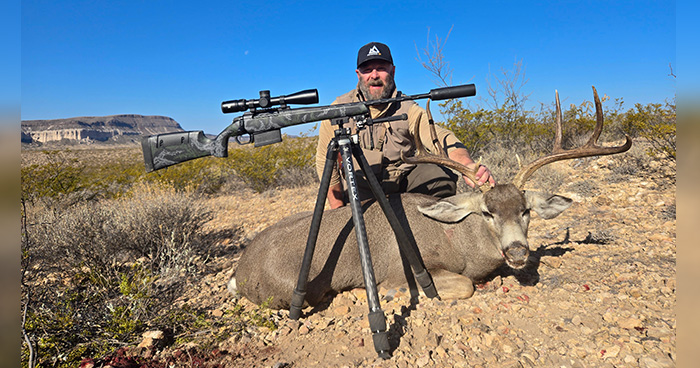
I took a nice muley buck with the Weatherby 307 Range XP 2.0 a few weeks ago from just under 500 yards. The 7MM Backcountry allowed me superb performance in a hunting friendly setup and the results were very nice. I enjoyed toting a compact, well-balanced rifle with magnum level performance. 


Continue reading
  771 Hits

New For 2025! The VX-6HD Gen 2 Scope By Leupold

This review introduces Leupold’s most high-tech line of rifle scopes to date, the VX-6HD Gen 2. With more features than you can dream of, this line of scopes is ready to upgrade your hunting experience. Eastmans’ Brandon Mason breaks down all of the details on this new product and puts it to the test under a variety of conditions.

The post New For 2025! The VX-6HD Gen 2 Scope By Leupold appeared first on Eastmans' Official Blog | Mule Deer, Antelope, Elk Hunting and Bowhunting Magazine | Eastmans' Hunting Journals.

  390 Hits


Outdoorsmen