


Ted from The Hunting Public take two youth hunters Caleb and Landon on wild turkey hunts in the early Youth season in Iowa and Missouri.
The Hunting Public

779 Hits


Ted from The Hunting Public take two youth hunters Caleb and Landon on wild turkey hunts in the early Youth season in Iowa and Missouri.
Canning Venison is easy. John Royer shows you how to do the cold pack canning process for venison. Then he shows you how to use the canned venison to make hot deer meat sandwiches with venison gravy. The deer meat is from a doe that John shot on a hunt
Joel Strickland and ‘Lab Coat Guy’ say “NO” to Soaking Wild Game Meat. They have good reasons too, and you will want to hear those reasons before you begin to prepare your next wild game meat for eating.
Antlers begin as vascular tissue, one of the fastest growing tissues in the animal kingdom. They’re made up of a network of vessels that carry blood and nutrients to the rapidly growing matrix, which is covered by a thin layer of skin and hair we refer to as velvet. As they reach maturity, antlers go through a process of mineralization. Blood flow is cut off and they become hard, dead bone.
Antlers serve several purposes. Bucks use them to spar with other males as they build neck and shoulder strength and sort out dominance. Later, they may be used as weapons when fighting a rival for the opportunity to breed. They also act as signals to a potential mate, larger antlers demonstrating a healthy individual.
Once the breeding season is over, they become more of a liability than an asset. They’re no longer needed to fight a rival or attract a mate. They could tangle in limbs, vegetation or some structure, and impact with a solid object could result in skull fractures or abscesses. So, they’re cast off.
Photoperiodism (changes in the amount of daylight) triggers seasonal changes in deer physiology. As the days grow longer in the spring, the production of certain hormones like testosterone increases, promoting antler growth. As they grow shorter in winter, testosterone levels decline. The connection between skull and antler begins to degrade. An abscission line forms and eventually the connection becomes weak enough that the antlers fall, or get knocked off.behavior are caused largely by. Waning day length prompts a reduction in. That, in turn, causes an abscission line to form at the pedicel base as connective tissue dies. Then the antlers fall off. However, it is not a precise mechanism and there are other influencing factors, some of which are inter-related.
When exactly deer shed their antlers can depend on several things including age, health and genetics. Older bucks tend to shed earlier, perhaps because the mechanisms that cause antlers to shed have been fine-tuned over time. All those mechanisms require sufficient resources to function properly. If a deer is in poor health due to disease, malnutrition (including mineral deficiency) or injury, they may be stressed, causing antlers to be cast off sooner.
Venison ‘Stalkers Pie’ is a once traditional dish that has been resurrected by Scott Rea and it’s absolutely delicious.
Scott Rea is an Author, Butcher and Cook. The personal passion Scott has for butchery and food that he wanted to share before the skills and traditions he learned over a lifetime faded away. But it has evolved and become a movement of like minded people who frequent Scott’s numerous videos to imitate, replicate, modify and experiment!
Enjoy the traditional artisan butchery and recipes being brought into the 21st century for a new generation to discover and enjoy. No longer are these products, recipes and methods frowned upon, Today’s this new audience are getting back to the basics of field to fork, nose to tail eating.
Knowing what wild turkey hens are doing when you hear them helps you get better at bowhunting wild turkeys. This video shows you which calls are important for you to know and understand. And it demonstrates how you can make them and when to.
Every hunter needs a good pair of binoculars. The problem is a good pair of binoculars can cost a small fortune. If you have a new pair of binoculars on your wish list, Nick Hoffman, the host of Nick’s Wild Ride, is here to help. Nick is giving away a new pair of Vortex Binoculars this spring just in time for turkey season.
Vortex Optics are considered by many to be the best binoculars for the money in the industry. “I have been using Vortex Binoculars, riflescopes and rangefinders for years. They go with me on every hunt,” Hoffman said. “There is no doubt Vortex optics are crystal clear, hold up in the harshest conditions, and are built to last. In addition, they offer the best warranty out there.”
To learn more about Vortex Optics, visit www.vortexoptics.com.
Using a bow requires that you get in closer than you do with a shotgun. Setting up in the woods, on the ground, can be tricky. Here are some tips on picking the right place for your turkey hunting situation and setting up so you won’t be seen and will be able to get a bow range shot. This video covers important information applicable to hunting with a bow and arrow that will help you in filling your turkey tag(s) this year.
Jeff Sturgis shares his proven tips for finding shed antlers on both public or private land. In this video Jeff Sturgis of Whitetail Habitat Solutions covers every aspect of finding shed antlers. This is the most complete information I’ve ever heard or seen on the topic of Finding Shed Antlers. Watching this will make you a more successful shed hunter, absolutely.
The wild turkey mouth call is perfect for helping every turkey hunter sound like a wild turkey making its most basic call. This video moves you through the important steps that will lead you through putting it together to make your number one, most effective, turkey call sound.
Learn how to quickly yelp on a mouth call using the best method for building a solid foundation of mechanics. Starting with a single reed mouth call, will allow you to learn how to yelp well enough to call in gobblers quickly while also building solid fundamentals. Then moving to the double Reed no cut and focusing on how to present air to the mouth call using your diaphragm, allows you to learn the proper air control to produce realistic yelps.
Finally going to a three Reed call with rasp and focusing on finding the sweet spot in the call to get that clean top end note of the Yelp and bringing in the rasp naturally by accelerating the air and reducing tongue pressure will have you making the most realistic yelps possible. Following this simple 3 step process eliminates all the bad habits that cause people to struggle with mouth calls.
Tips for finding shed antlers. by Bob Humphrey
For true deer hunters the season never ends. We may not be able to shoot them until next fall, but we can still hunt them, or at least the sign they leave behind. One of the most exciting and informative signs is shed antlers. And just like conventional hunting, there are some tricks and tips to make you more successful.
When the rut is over, bucks focus their attention on feeding, restoring the depleted fat stores they’ll need to survive winter. Find the food and you’ll find the deer, and maybe their antlers. Where to look depends on where you live but it could be oak groves, late season food plots or un- or under-harvested crop fields. A fresh cutting may have remnant tops of downed hardwood trees. An two or three year old cut will have stump sprouts, a favorite winter food of deer. Take note because these are the same areas they use in late fall.
Besides eating, deer survive winter by minimizing energy expenditure. They do this by seeking shelter. In the north woods, they concentrate in wintering areas or yards, where dense softwood cover breaks the wind and reduces snow depth. In steeper terrain or more open ground they’ll spend more time on south and east facing slopes, protected from prevailing winds and exposed to more sunlight. Often these are the same areas they’ll use year round as bedding cover.
Often antlers simply fall off but sometimes they need a little help. This could come in the form of any obstacle that requires a deer to jump over or across, like a fence, a stone wall or a narrow stream. Dense vegetation, like softwood boughs or briar thickets might also hasten and localize the shedding process. All these places might also be regular travel routes during the real hunting season.
On her way back so the pickup Sydney Wells encounters 2 Javelina and gets her bow and arrow into play,
Sydnie Wells drops a boar Javelina in his tracks with one shot. She used a Grim Reaper Broadhead with a 2-Inch cut.
You’ll pick up more shed antlers by searching in high-odds areas. Food sources are the #1 locations to find sheds, according to Dwayne Jones, community manager of Shed Season (shedseason.com), a website that lets shed hunters share their finds.
“Look for the food,” Dwane Jones said. “Regardless of where you live, you’re going to find the bucks sheds where you find the food source.”
Look around crops for sheds. Photo Credit: Shed Season
In Jones’ home state of Indiana, that often means bean fields, standing grain or cover crops like tillage radish. It might be something different in your area, but finding the best food means finding shed antlers, too.
Another tip is to avoid shed hunting too early in the year, particularly during mild winters, when many bucks will carry their antlers into mid-February.


March is the month many wild turkey hunters will be kicking off a quest. The wild turkey Grand Slam involves taking (at least) one of each of the four recognized races of wild turkey found in the U.S. It’s a daunting challenge, especially for a bowhunter, but it can be done with a little planning and a lot of luck.
Seasons open in March making Florida a good place to kick off your slam. The best option for non-resident hunters is a guided hunt, but demand and prices can be high as Florida has a monopoly on Osceola turkeys.
Still, odds for success are also higher with a guide, and this is often the toughest subspecies to tackle. If you prefer the DIY approach, The Florida Fish and Wildlife Conservation Commission manages public hunting on 6 million acres in their WMA system and the WMA Finder app on their website will help you find locations best suited to turkey hunting. https://ocean.floridamarine.org/HGMSearch/Search.aspx
Merriams wild turkeys can also be challenging, for different reasons. They inhabit rugged, open terrain of the western states like Montana, Wyoming, South Dakota, Nebraska, Colorado, New Mexico and Arizona. Cover is sparse and Merriams travel a long way during the day.


Official Alabama Department of Conservation and Natural Resources bowhunting safety education course
Official Alaska Department of Fish and Game bowhunting safety education course
Official Arizona Game and Fish Department bowhunting safety education course
If you haven’t looked for shed antlers this year, or you have poor success finding them, here are some good reasons to get out in your deer hunting area and give shed hunting a good try this year, right now.
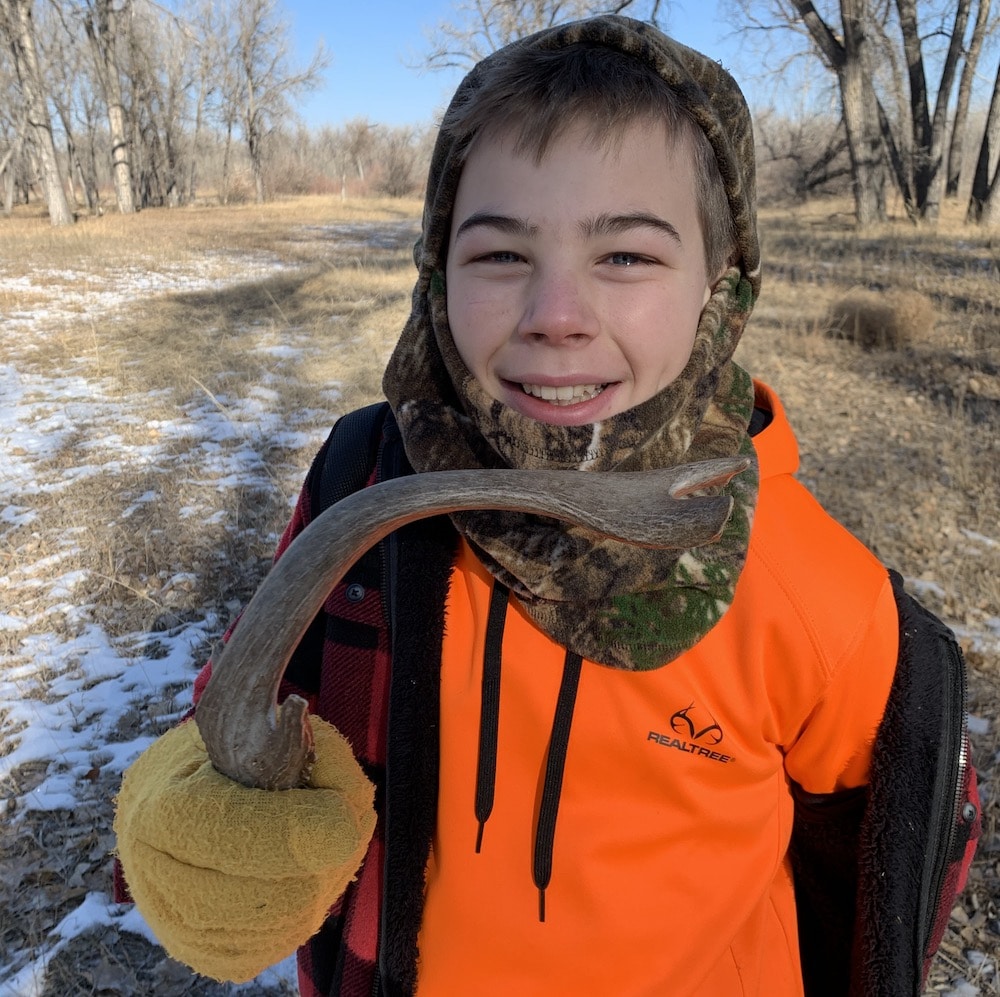
Finding sheds after deer season confirms that the buck survived the season. Photo Joe Shead
Last fall’s rubs, scrapes and trails will still be visible after the snow melts and before spring green-up occurs. Plus, at that time of year, you don’t have to be paranoid about bumping a buck from its bedding area and making him go nocturnal. The deer will have months to forget the encounter. Therefore, it’s a good time to get into the thick bedding cover bucks call home or even to invade the places you may consider sanctuaries during bow season. By shed hunting at this time, you’ll get a feel for where deer are bedding now and how they enter and exit these bedding areas, which can help you set up a perfect ambush when archery season rolls around.
If you find a fresh shed antler in the spring, there’s a good chance the buck that dropped it survived hunting season as well as the winter. He still has to dodge predators and vehicles in some areas for several months before the next bow season. Body size differs between young and old bucks, but aside from that, individual animals are difficult to tell apart after they cast their antlers. But finding a shed is proof positive that a particular buck at least made it through hunting season and is very likely in your area.
I can practically still feel the adrenaline coursing through my veins from opening morning of Wisconsin’s 2021 Wild Turkey Season. Two gobblers marched toward my decoys. At 20 yards and closing, their drumming sounded like a subwoofer. I subconsciously whispered, “Showtime.”
This encounter underlined what separates archery and shotgun hunting. With the wild turkeys now flogging my decoy 8 yards away, it was a show most shotgun hunters end yards before it begins. Sure, I get my kicks from a gobbler doing his thing at 25-40 yards, but two of them beating up my decoys just barely beyond spitting distance is second to nothing.
I held at full draw as the toms bullied my poor decoy. They were a blur. Finally, the strutter paused facing directly at me. My broadhead sliced his waddles, destroyed the vitals and exited his hip. He fluttered, then slumped mere paces from my still bobbing jake decoy.
A shotgun can be deadly through thick brush if you can somewhat see the bird’s head. With a bow, you need a wide-open shot at the body. So, I prefer to bowhunt fields, and I only hunt fields I know gobblers are using based on my scouting. With toms roosted nearby, I’ll set up a blind the morning of my hunt somewhere in the middle of the field, usually on a high point with excellent visibility. I set my decoys at 10 yards or less — I like slam-dunk shots.
When setting up a blind, always face it west, north or south for morning hunts. On afternoon hunts, face it east, north or south. This keeps the sun from shining into your blind and exposing you.

When hunting wild turkeys from a ground blind I take the same approach as hunting whitetail deer and antelope, with the exception that scent detection is not an issue. However, concealment, eliminating noise and movement is a major priority. Turkeys have excellent eyesight and a superior ability to detect movement
When hunting from a portable ground blind, here are a few tips and details I always pay close attention to
| Author proves doing the right things can have positive results. |
Even the roomiest Portable Ground Blinds have limited floor space…..therefore your shot flexibility is limited.
I place my gear such as packs, extra clothing, food, water, etc. towards the very front of the blind. This allows more room to position myself further back from the shooting window and reduce the possibility of a wild turkey seeing my movement and detecting me. Because I prefer to shoot from my knees, all I have to do is fold my chair and slide it forward to maximize the shooting floor space.Using shoot through mesh over the windows is a good idea; also, I wear clothing that mirrors the interior of the blind or a dark neutral color.Blind placement is very important. Try to determine the direction of the approaching gobbler. Hunting from farm areas or on private ground makes it much easier to pattern wild turkeys….understanding how they use an area allows for a more accurate prediction for your setup.I like to place a blind in an area where approaching birds will have to pass from the left or right in front of the shooting window to access the decoys. If possible, position yourself on the same side of the blind that the birds are approaching from. This will give you an opportunity to draw your bow in a concealed location which will help decrease detection.A common mistake bowhunters make is forgetting the arrow shaft is lower than the bow-sight ….therefore it is very easy to send an arrow shaft through the wall of the blind. Take a moment to make sure your arrow will clear the shooting window.Archers should plan shots on non-strutting turkeys….strutting gobblers appear larger than they are. At the sound of the bow string wild turkey often drop down a few inches causing a high hit or a missed shot. A gobbler in strutting position can create an illusion confusing the archer on the actual location of the vital area.Hope these tips are helpful…..good shooting and hunting!
Ron Gaines
HoytUSA StaffInnerloc BroadheadsEaston Arrow ProductsCarter EnterprisesConk’s Faded Sage CamouflageWinner’s Choice Strings
Bowhunter Brian Barney hikes deep into the high country mule deer territory. Brian, Eastmans’ Elevated Podcast Host is on his quest for a trophy class, public land mule deer. It’s an early season bowhunt and there’s good potential to find a buck that’s still in velvet. Brian uses his wealth of DIY knowledge to hunt country that’s difficult to access and has few reliable water sources on this episode of Beyond the Grid by Eastmans’.


