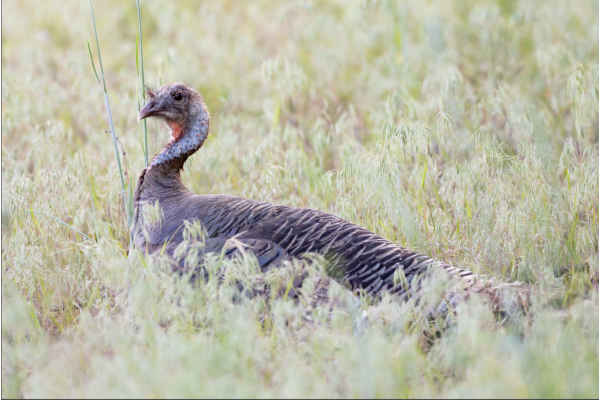



EDGEFIELD, S.C. — A new research project in Texas, funded in part through the NWTF’s 2025 investment in wild turkey research, seeks to investigate the season-specific survival rates of female Rio Grande wild turkeys, giving biologists a clearer picture of how to keep these iconic birds thriving on the landscape.
The research project is both collecting new data and utilizing data collected over the past decade on Rio Grande wild turkeys across diverse ecoregions in Texas.
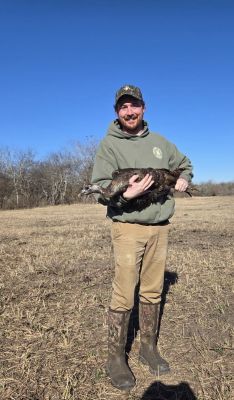
Between 2016 and 2025, more than 700 female Rio Grande wild turkeys were captured and fitted with leg bands and GPS-VHF backpack transmitters using drop-nets and walk-in traps. Currently, there are over 20 birds with active transmitters on the landscape, and project investigators plan to deploy more solar transmitter units this year to collect new data.
“A very cool aspect of this project is that this is one of the longest-running wild turkey data sets in Texas,” said Nicholas Bakner, Ph.D., project lead and postdoctoral researcher at the University of Delaware. “The data was collected from over 775 female wild turkeys by the Texas Parks and Wildlife Department and was only used for a few master’s projects looking at smaller-scale things like precipitation and survival. Looking at resource selection, like what we’re looking to do, has not yet been scratched.”
Using the GPS tracking data and state-specific reproductive timing, Bakner and his team will assign individual females to five seasonal life-cycle stages: pre-laying, laying, incubation, brooding and post-reproduction and then evaluate mortality within each stage. Researchers are curious to see what periods during the female’s life cycle are associated with the highest mortality risk. Project results will help evaluate how landscape characteristics and habitat management practices influence survival during those high-risk periods.